On this page
What Is Smart Packaging? The Complete Guide for 2026


TL;DR
- Smart packaging turns physical packaging into a digital touchpoint using technology like AR, QR codes, NFC, and sensors.
- CPG and FMCG brands use smart packaging to collect first-party data, run campaigns, and extend the product experience beyond the shelf.
- Browser-based AR (WebAR) is the fastest way to pilot smart packaging because it requires no app download from users.
- The global smart packaging market was valued at USD 28.5 billion in 2023 and is projected to reach USD 43.3 billion by 2030 (Grand View Research, 2024).
- HOVARLAY’s Campaigns module delivers a 13.23% average conversion rate on smart packaging activations (HOVARLAY internal data, 2025).
What Is Smart Packaging?
Smart packaging is packaging that goes beyond protecting a product. It uses embedded technology to communicate with users, provide real-time information, or trigger a digital experience. The technology varies: QR codes, NFC chips, RFID tags, augmented reality markers, and freshness sensors all qualify as smart packaging components. What they share is the ability to extend the value of physical packaging into a digital channel.
For CPG and FMCG brands, smart packaging is a direct response to a core problem: the shelf is the last point of brand contact before purchase, and most packaging does nothing after the product leaves the store. Smart packaging changes that. A label becomes a loyalty program. A box becomes a tutorial. A bottle becomes a lead capture form.
Smart packaging is not one technology. It is a category of solutions. The right approach for a food brand running a seasonal campaign differs from a pharmaceutical company tracking cold chain compliance. This guide focuses on smart packaging for consumer brands, specifically the AR-powered and campaign-driven use cases where HOVARLAY operates.
The Market Behind Smart Packaging
The global smart packaging market was valued at USD 28.5 billion in 2023 and is projected to reach USD 43.3 billion by 2030, growing at a CAGR of 6.2% (Grand View Research, 2024). Asia Pacific is the fastest-growing region, driven by e-commerce expansion and a surge in CPG brand investment in direct-to-consumer engagement.
This growth reflects a structural shift. Brands are no longer willing to treat packaging as a cost center with no return signal. Smart packaging gives them a feedback loop: scan events, dwell time, campaign completions, and lead captures all feed back into marketing data. That data has measurable commercial value, especially for brands that have limited visibility into what happens after the point of purchase.
The drivers behind this growth are well-documented. IoT-enabled packaging for direct-to-consumer engagement is one of the top growth factors globally, with North America, Western Europe, and Japan leading early adoption (Mordor Intelligence, 2025). In Southeast Asia, CPG brands are increasingly exploring smart packaging as a way to compete for attention in crowded retail environments where shelf space is limited and digital advertising costs are rising.
How Smart Packaging Works in Practice
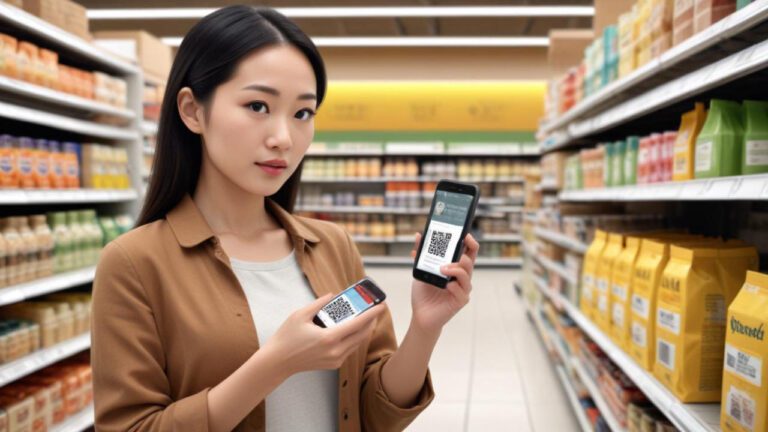
Smart packaging works by linking a physical trigger on the package to a digital experience. The trigger is typically a QR code, NFC chip, or AR marker. When a user scans or taps it, they are directed to a web-based experience. No app required. No friction. The experience loads in the browser.
For AR-powered smart packaging, the flow is straightforward. A user scans the QR code on the packaging using their phone camera. The browser opens a WebAR experience: an animation, a product story, a gamified campaign, or a lead capture form. The brand captures the interaction as a data point. The user gets something of value, whether that is entertainment, information, or an offer.
HOVARLAY’s platform handles this end-to-end. The Creator module lets brand teams build AR experiences without writing code, using a visual drag-and-drop interface. The Lens module renders the AR in-browser. The Campaigns module wraps the experience in a conversion layer: spin wheels, scratch cards, and prize mechanics that drive users to submit contact details. The Insights module tracks every scan, session, and completion. One platform. One SKU. Start small. Test it. The HERA Bathroom CNY campaign and the Happy Harvest 10.10 activation are both examples of this full-stack smart packaging approach in action, and both were built and deployed using HOVARLAY Creator.
Types of Smart Packaging Technologies
Smart packaging spans several technology categories. Understanding them helps brands choose the right approach for their specific objective.
QR code packaging is the most widely deployed smart packaging technology today. It is low-cost, printer-compatible, and requires no hardware beyond a smartphone camera. The limitation is that QR codes link to URLs, not experiences. Without a well-designed landing experience behind the code, the scan goes nowhere useful. This is where platform selection matters.
WebAR packaging uses augmented reality delivered through the browser. No app download. The user scans a QR code, the camera activates, and the AR layer appears on top of the physical product or environment. WebAR is the fastest-growing format for consumer brand activations because it has the lowest barrier to entry for both brands and their users. HOVARLAY’s no-code WebAR builder at /webar-builder/ is designed specifically for CPG packaging use cases.
NFC and RFID packaging embeds physical chips in labels or packaging materials. These allow tap-to-interact on NFC-enabled smartphones, without a camera scan. NFC is more common in premium and luxury packaging where the per-unit cost is acceptable. RFID sees wider use in supply chain and anti-counterfeiting applications. For most CPG brands running consumer-facing campaigns, QR-triggered WebAR delivers a better cost-to-engagement ratio.
Sensor-based smart packaging uses active or passive sensors to monitor product conditions: temperature, humidity, freshness, and tamper evidence. This category is more relevant for pharmaceutical, food safety, and cold chain logistics than for consumer brand marketing. It addresses a different problem from the AR and campaign-focused smart packaging discussed in this guide.
What Smart Packaging Delivers for CPG Brands
Smart packaging delivers three things that traditional packaging cannot: first-party data, direct consumer engagement, and measurable campaign ROI.
First-party data is increasingly valuable as third-party cookies phase out and digital advertising becomes less predictable. Every smart packaging interaction is an owned data point. A scan event tells you which product, which market, and when. A campaign completion tells you which user, what they engaged with, and whether they converted. Over a product run, this builds a direct data relationship that no media buy can replicate.
Direct engagement happens at the highest-attention moment in the product experience: when the user is holding the product. Smart packaging captures that attention and redirects it into a brand experience. HOVARLAY’s Campaigns module averages a 13.23% conversion rate on gamified packaging activations, meaning roughly 1 in 8 scans results in a lead capture (HOVARLAY internal data, 2025). That is a meaningful number for brands used to measuring engagement in tenths of a percent on social ads.
Measurable ROI comes from the Insights layer. Every scan, session duration, campaign completion, and form submission is tracked and reportable. Brands can see exactly which SKUs are driving the most engagement and adjust future campaigns accordingly. This is the shift from packaging as a cost to packaging as a channel. Brands that want to explore this can view platform details and pricing at /pricing/.
How to Start Testing Smart Packaging
Starting with smart packaging does not require a platform overhaul. The lowest-risk approach is to pilot AR on one SKU. Choose a product with a seasonal campaign window or a new launch where engagement data would be valuable. Build the experience, print the QR code on the existing label or an on-pack insert, and track the results.
HOVARLAY’s per-SKU pricing model is designed for exactly this approach. Brands pay per SKU per month, not per scan or per campaign. That means the cost is predictable and the test is contained. If the pilot delivers useful data and measurable engagement, scale to additional SKUs. If it does not, the cost of the experiment is known upfront. View the full pricing structure at /pricing/ to see which tier fits a pilot scenario.
For brands that have not run AR campaigns before, the case studies at /case-studies/ show how brands across different categories have built and launched smart packaging activations using HOVARLAY. The Summarecon Golden Expo WebAR activation and the Happy Harvest 10.10 campaign both started as pilots before expanding. Start free at https://dashboard.hovarlay.com/signup
FAQ
What is smart packaging in simple terms?
Smart packaging is physical packaging that connects to a digital experience when scanned or tapped. It uses technologies like QR codes, AR markers, or NFC chips to take users from the product to a website, animation, campaign, or data form. The goal is to make the packaging do more than sit on a shelf.
How is smart packaging different from regular packaging?
Regular packaging protects and informs. Smart packaging also communicates, engages, and captures data. A standard label tells users what is inside the box. A smart packaging label can trigger an AR experience, run a prize mechanic, or capture a lead, all from the same physical touchpoint.
What technology does smart packaging use?
Smart packaging relies on QR codes, NFC chips, RFID tags, AR markers, and in some cases embedded sensors. For consumer-facing campaigns, QR-triggered WebAR is the most practical format because it requires no app and works on any smartphone with a camera.
Is smart packaging expensive to pilot?
Piloting smart packaging on one SKU is more affordable than most brands expect. HOVARLAY’s per-SKU pricing starts at USD 6-9 per SKU per month on the Starter plan, with no per-scan fees. A single-SKU pilot can be built and launched in days using the no-code Creator platform.
What results can smart packaging deliver?
Results vary by campaign design and product category, but HOVARLAY’s gamified packaging campaigns average a 13.23% conversion rate on scan-to-lead activations (HOVARLAY internal data, 2025). Brands typically measure scan volume, dwell time, campaign completions, and lead captures as the primary success metrics.
Related reading: Smart Packaging Trends 2026 | AR Packaging Examples: 10 Brands Getting It Right in 2026