On this page
Smart Packaging Trends 2026: What CPG Brands Need to Know
- TL;DR
- Smart Packaging Trends 2026: What CPG Brands Need to Know
- The Smart Packaging Market in 2026
- Trend 1: WebAR Replaces App-Based AR on Packaging
- Trend 2: Gamification Drives Lead Generation from the Pack
- The structure is straightforward:
- Trend 3: Sustainability Storytelling via QR and AR
- Trend 4: NFC and QR Convergence on Premium Packaging
- Trend 5: Insights and Analytics as a Packaging KPI
- Every pack scan is a data event. HOVARLAY’s Insights module captures:
- Trend 6: Per-SKU Pricing Makes Smart Packaging Accessible
- Frequently Asked Questions


TL;DR
- The smart packaging market is valued at $32.22 billion in 2025 and projected to reach $55.56 billion by 2034 (Precedence Research, 2025).
- In 2026, the dominant trends are AR-enabled packaging, NFC-triggered experiences, sustainability storytelling, and gamified lead generation.
- WebAR is the fastest path to smart packaging: no app needed, works on any smartphone, activated by a QR code on the pack.
- HOVARLAY campaigns using gamified AR activations average a 13.23% conversion rate (HOVARLAY internal data, 2025).
- Brands that combine physical packaging with digital engagement through WebAR are building first-party data assets their competitors cannot copy.
Smart Packaging Trends 2026: What CPG Brands Need to Know
Smart packaging trends in 2026 point toward one clear direction: packaging is no longer a container. It is a channel.
Brands spending millions on shelf presence are now asking how that same surface can generate data, build relationships, and drive repeat purchases. The answers all involve connecting the physical pack to a digital experience via NFC, QR, or WebAR. What separates the brands winning from those just following the trend is execution depth.
This article covers the six most significant smart packaging trends in 2026 and where HOVARLAY fits into what CPG brands are actually building.
The Smart Packaging Market in 2026
The global smart packaging market is valued at $32.22 billion in 2025 and is forecast to reach approximately $55.56 billion by 2034, expanding at a CAGR of 6.24% (Precedence Research, 2025). Grand View Research puts the 2023 market at $28.5 billion, projecting $43.3 billion by 2030 at 6.2% CAGR (Grand View Research, 2024).
Those numbers confirm one thing: brands not treating packaging as a digital touchpoint are working with a shrinking competitive window.
Asia Pacific is the fastest-growing region, making HOVARLAY’s Southeast Asia focus well-timed. Brands in Singapore, Indonesia, and Malaysia are earlier in their WebAR adoption curve, meaning the competitive window is wider here than in North America or Europe.
Trend 1: WebAR Replaces App-Based AR on Packaging
WebAR is augmented reality that runs directly in a smartphone browser. No app download required.
This is the most important smart packaging trend of 2026 because it removes the single biggest barrier to AR adoption: friction. Brands that ran AR campaigns in 2022 and 2023 with app downloads saw activation rates in the low single digits. WebAR removes that wall entirely.
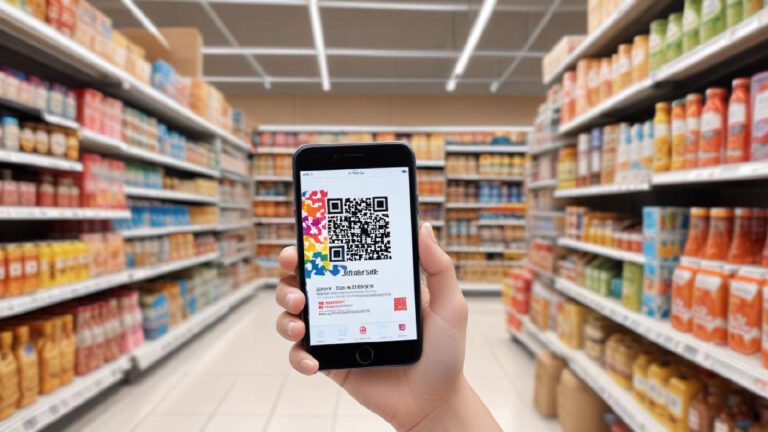
In 2026, a buyer scans a QR code on a pack with their phone camera. The AR experience loads in 3 to 5 seconds in the browser. No install. That is a fundamentally different experience than asking someone to search an app store.
HOVARLAY’s Lens product handles this WebAR delivery layer. Brands build their AR experience once using the Creator platform, and Lens serves it directly in the browser to any device. For CPG brands evaluating smart packaging options, the question to ask any AR vendor is: does your platform require an app? If yes, the activation rates will reflect that friction.
Trend 2: Gamification Drives Lead Generation from the Pack
Gamified packaging experiences are becoming a standard tool for CPG brands running seasonal or promotional campaigns.
Smart packaging in 2026 is not just about information delivery. It is about action. Gamified AR experiences give brands a direct mechanism to collect first-party data, run sweepstakes, and drive repeat purchase without relying on a retailer platform or social media algorithm.
The structure is straightforward:
- Buyer scans the QR code on the packaging
- AR experience launches in the browser
- A gamified mechanic runs: spin-to-win, scratch-to-reveal, or mini-game
- User opts in with an email or phone number to claim a reward
- Brand captures verified, consented first-party data
HOVARLAY’s Campaigns module averages a 13.23% conversion rate across activations (HOVARLAY internal data, 2025). Average email opt-in rates on landing pages run 1.5% to 3%. Gamified AR outperforms because the experience is novel, immediate, and tied to something the user holds in their hands. Happy Harvest’s 10.10 campaign on this model drove opt-ins well above their standard digital campaigns.
Trend 3: Sustainability Storytelling via QR and AR
Sustainability claims on packaging are losing credibility with buyers who have no way to verify them. Smart packaging closes that gap.
In 2026, a growing number of CPG brands are using QR codes to deliver sustainability proof behind the label. That means:
- Supply chain origin maps showing where ingredients were sourced
- Carbon footprint data per unit, updated in real time
- Certifications rendered as verifiable, interactive cards rather than static logos
- Packaging material breakdowns with recycling instructions
WebAR adds a layer to this. Instead of linking to a text page, brands build a lightweight AR scene that walks the user through the product’s sustainability story. A 30-second AR experience showing farm origin, processing, and recycling instructions communicates more trust than three paragraphs of back label copy.
This is verification, not greenwashing. The brands getting this right in 2026 treat sustainability transparency as a brand asset.
Trend 4: NFC and QR Convergence on Premium Packaging
NFC tags and QR codes are converging on premium packaging lines in 2026, serving different segments from the same pack.
NFC (near-field communication) tags allow a phone tap to trigger a digital experience without opening a camera app. They cost more to embed than a printed QR code but deliver a frictionless premium experience. QR codes remain dominant because of near-universal smartphone support and zero per-unit cost above print.
In 2026, the approach emerging on premium CPG lines is dual-channel: NFC for the tech-forward buyer who taps, QR for the mainstream buyer who scans. Both routes lead to the same WebAR experience. The brand builds once, distributes via both access points.
Mordor Intelligence tracks IoT-enabled packaging adoption by CPG brands for direct-to-consumer engagement as a key growth driver in the smart packaging market, with notable traction in North America, Western Europe, and Japan (Mordor Intelligence, 2025). HOVARLAY supports QR-triggered WebAR as the primary activation mechanism, with NFC compatibility for brands running premium lines. See real-world implementations at hovarlay.com/case-studies/.
Trend 5: Insights and Analytics as a Packaging KPI
Smart packaging generates data. In 2026, the brands treating that data as a strategic asset are building competitive moats.
Every pack scan is a data event. HOVARLAY’s Insights module captures:
- Scan volume by SKU, region, and date
- Session duration and interaction depth within the AR experience
- Conversion events: opt-ins, coupon claims, purchases
- Device and browser data for technical optimisation
- Geographic heat maps of activation clusters
For a brand manager, this data transforms packaging from a cost centre into a measurable channel. When a retailer asks for evidence of buyer engagement with a SKU, brands running smart packaging campaigns have the data to show it. That changes the commercial conversation at shelf.
The shift in 2026 is that brand teams are beginning to include packaging scan data in quarterly business reviews alongside social and paid media metrics. Smart packaging analytics is becoming a standard KPI category.
Trend 6: Per-SKU Pricing Makes Smart Packaging Accessible
The old model for smart packaging was enterprise-only: large minimum orders, agency production fees, complex technical integrations, and licensing structures built for Fortune 500 budgets.
In 2026, per-SKU pricing models are bringing smart packaging to mid-market and challenger brands.
HOVARLAY prices its WebAR platform per SKU per month, starting at $6 to $9 for Starter and $39 to $59 for Pro. That pricing structure means a brand with five SKUs can run a full AR packaging campaign for the cost of a single day of paid social. The economics are no longer a barrier. View current pricing at hovarlay.com/pricing/.
This accessibility is accelerating adoption among brands that were previously locked out of smart packaging by cost. In 2026, the question is not whether a brand can afford smart packaging. The question is whether it can afford to skip it while competitors are building first-party data from the same shelf space.
Frequently Asked Questions
Q: What are the top smart packaging trends in 2026?
A: The six leading trends are WebAR-enabled packaging, gamified lead generation, sustainability transparency via QR and AR, NFC and QR convergence on premium lines, analytics-driven packaging KPIs, and per-SKU pricing opening the market to challenger brands.
Q: How much is the smart packaging market worth in 2026?
A: The global smart packaging market is valued at $32.22 billion in 2025, projected to reach $55.56 billion by 2034 at a CAGR of 6.24% (Precedence Research, 2025). Grand View Research projects the market at $43.3 billion by 2030 (Grand View Research, 2024).
Q: What is WebAR and why does it matter for smart packaging?
A: WebAR is augmented reality that runs in a smartphone browser without requiring an app download. It matters because it removes the friction that made app-based AR campaigns underperform. A buyer scans a QR code on the pack and the AR experience loads in seconds.
Q: How do brands collect leads from smart packaging?
A: Brands using gamified WebAR campaigns collect leads through an opt-in mechanic in the AR experience. A user scans the pack, completes a gamified action such as a spin-to-win, and submits contact details to claim a reward. HOVARLAY’s Campaigns module averages a 13.23% conversion rate on these activations (HOVARLAY internal data, 2025).
Q: How do I get started with smart packaging in 2026?
A: The fastest entry point is HOVARLAY Creator, a no-code WebAR builder that attaches an AR experience to an existing QR code on your packaging. Brand teams can build, launch, and measure campaigns without writing code. Explore at hovarlay.com/webar-builder/ and start free at https://dashboard.hovarlay.com/signup.
Related reading: AR Packaging Examples | Augmented Reality Packaging