On this page
WebAR vs App-Based AR: Why No-Download Wins for Packaging


TL;DR
– WebAR runs entirely in a mobile browser. Users scan a QR code and the AR experience launches instantly, no app download required.
– App-based AR forces users to find, download, and open a dedicated application before seeing any experience. Conversion drops at every step.
– For CPG packaging, WebAR consistently outperforms app-based AR on engagement rates because the friction is near zero.

– HOVARLAY’s no-code platform lets brands build and launch WebAR packaging experiences without writing a single line of code.
– Brands piloting WebAR on one SKU can validate results with real analytics before scaling across their full range.
WebAR vs App-Based AR: Why No-Download Wins for Packaging
For any CPG brand putting augmented reality on packaging, the first technical decision is also the most important one: WebAR or a dedicated app? The answer shapes how many users actually experience what you built.
WebAR vs app-based AR is not just a technical comparison. It is a question of reach. An AR experience buried inside a branded app will reach only users willing to download it. A WebAR experience triggered by a QR code on the packaging reaches almost every user who scans it.
What Is the Difference Between WebAR and App-Based AR
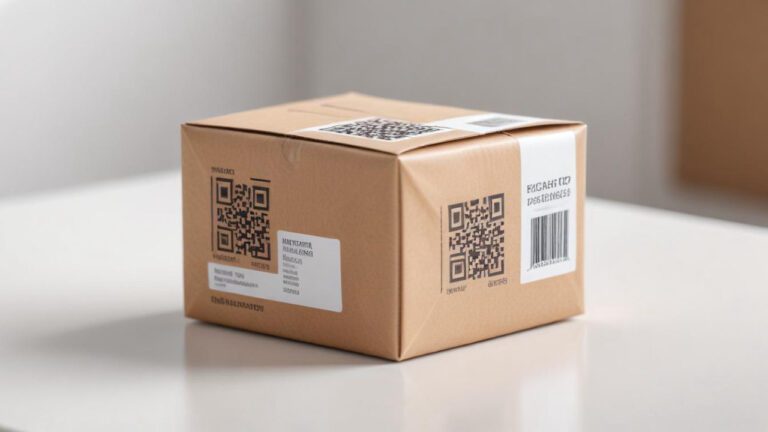
WebAR is augmented reality that runs directly in a mobile browser, with no application download required. Users point their phone’s camera at a QR code or image trigger, and the AR experience launches in Safari, Chrome, or any modern mobile browser.
App-based AR requires a dedicated mobile application. The user must open an app store, search for the app, download it, open it, grant permissions, and then access the AR feature. Each step in that sequence costs engagement.
The technology gap between these two approaches has narrowed significantly in recent years. WebXR, the browser-based API that powers most WebAR experiences, is now supported across the major mobile browsers (caniuse.com, 2025). This means the capability once reserved for native apps is now available to any brand placing a QR code on a label.
HOVARLAY uses WebAR as its core delivery mechanism, which means every experience built on the platform works directly from a packaging scan, with no download barrier between the brand and its users.
Why App-Based AR Fails at Scale for Packaging
App-based AR puts the brand’s conversion rate at the mercy of the app install funnel. That funnel is expensive and leaky.
Getting a user to install a branded app requires real motivation. Research consistently shows that users are reluctant to install apps they perceive as single-use or brand-specific. The average mobile user downloads zero new apps per month (Grand View Research, 2024). An AR app tied to a single product faces a near-impossible adoption curve, especially for fast-moving consumer goods where the purchase window is short.
Beyond installs, app-based AR creates ongoing maintenance overhead. Each iOS and Android update requires testing and re-deployment. If the app breaks or gets delisted, the AR experience on packaging simply stops working. For a brand that has printed millions of units with a QR code pointing to an app, that failure scenario carries serious commercial risk.
There is also a discovery problem. A user standing in a supermarket aisle, scanning a product out of curiosity, will not wait through an app download. That moment of intent is the highest-value interaction a brand can intercept on packaging. App-based AR misses it almost entirely.
Where WebAR Wins for CPG Packaging
WebAR’s core advantage is frictionless access. A QR code on a label, a short NFC tap, or a printed image trigger opens the AR experience in the browser with no steps in between.
For CPG brands, this matters because packaging interactions are impulsive. A user picks up a product, sees an invitation to scan, tries it immediately. HOVARLAY’s Campaigns module, which powers gamified lead generation experiences including spin wheels and prize reveals, achieves an average campaign conversion rate of 13.23% (HOVARLAY internal data, 2025). That rate is only possible because the experience loads without friction.
WebAR also makes data collection cleaner. Because the experience runs in the browser, brands can track every scan event, session duration, and campaign completion without relying on app analytics platforms. HOVARLAY Insights captures this data in real time, giving brand teams a live view of which SKUs are driving engagement and which markets are responding.
The no-app approach also aligns with how QR code use has developed post-2020. QR scanning behaviour is now habitual for mobile users across Southeast Asia, particularly in Singapore and Indonesia, where HOVARLAY operates. Users expect to scan and get instant information or experiences. WebAR fits that pattern exactly. App-based AR runs against it.
When App-Based AR Still Makes Sense
App-based AR is not obsolete for every use case. There are specific scenarios where it still makes practical sense.
Brands with large existing user bases for a functional app, such as a loyalty or commerce platform, can integrate AR features into that app without forcing a new download. If the app is already on the user’s phone and opened regularly, the incremental friction is low. A retailer or beauty brand with an active loyalty app is a reasonable candidate for embedded AR features.
App-based AR also supports more complex experiences that require persistent data, 3D asset caching, or hardware-level features not yet exposed through browser APIs. For highly specialised use cases, such as furniture placement visualisation with accurate room-scale tracking, native app AR may still offer better performance than browser-based alternatives.
For most CPG packaging campaigns, however, neither of these justifications applies. The goal is not a complex 3D simulation. It is a compelling, brand-consistent experience that a user completes in under a minute and remembers. WebAR handles that category with better economics and better reach.
Brands new to AR packaging should test WebAR on one SKU before committing to any approach. Running a controlled pilot via HOVARLAY’s webar-builder lets teams measure actual engagement data and compare it against any prior app-based AR performance.
How HOVARLAY Makes WebAR Practical for Brands
HOVARLAY’s platform is built specifically for CPG brands that want WebAR on packaging without a development team.
The HOVARLAY Creator is a no-code builder that lets brand managers and marketers design AR experiences directly, without writing code. Templates cover the most common packaging use cases: product demonstrations, recipe or usage guides, gamified prize mechanics, loyalty capture forms, and seasonal activations.
HOVARLAY Lens handles the delivery layer, parsing the QR code or image trigger and rendering the AR experience in the user’s browser with sub-three-second load times. HOVARLAY Campaigns adds lead generation mechanics, including the spin wheel and quiz formats that drive the 13.23% average conversion rate (HOVARLAY internal data, 2025).
Pricing is structured per SKU rather than per view, which removes the variable cost risk that makes many brands hesitant to scale. Transparent pricing details are available at https://hovarlay.com/pricing/ so teams can model ROI before committing to a campaign.
For brands looking at real-world case studies before deciding, HOVARLAY’s deployments include HERA Bathroom’s CNY red packet AR campaign, the Happy Harvest 10.10 activation, and the Summarecon Golden Expo WebAR experience. These are documented at https://hovarlay.com/case-studies/ with performance data.
FAQ
Q: What is the main difference between WebAR and app-based AR?
A: WebAR runs in a mobile browser with no download required. App-based AR requires the user to install a dedicated application before accessing any experience. For packaging campaigns, WebAR removes the install barrier and reaches significantly more users.
Q: Is WebAR vs app-based AR a quality trade-off?
A: For most CPG packaging use cases, the quality difference is minimal and the reach advantage of WebAR is decisive. Browser-based AR now supports 3D models, animations, gamification, and lead capture. The gap in visual capability only becomes relevant for highly complex native-app experiences that CPG packaging campaigns rarely require.
Q: Can WebAR handle lead generation and campaign mechanics?
A: Yes. HOVARLAY’s Campaigns module delivers gamified lead generation, including spin wheels and prize reveals, entirely through WebAR. The platform averages a 13.23% campaign conversion rate across active deployments (HOVARLAY internal data, 2025).
Q: How does WebAR work on packaging specifically?
A: A QR code or image trigger printed on the packaging links to the WebAR experience. When a user scans it with their phone camera, the browser opens and the AR experience launches automatically. No app, no search, no install required.
Q: Which brands should consider app-based AR over WebAR?
A: Brands with an existing high-traffic loyalty or commerce app may find value in embedding AR features inside that app. For most CPG brands without a large active app user base, WebAR delivers better reach at lower cost and complexity.
The fastest way to test WebAR on your packaging is to run a single SKU campaign and measure the results. Start free at https://dashboard.hovarlay.com/signup
Related reading: What Is WebAR? How Browser-Based AR Works | Best WebAR Platform 2026