On this page
Best WebAR Platform 2026: How to Choose the Right One for Your Brand


TL;DR
– The global AR market was valued at USD 120.21 billion in 2025 and is growing fast. Choosing the right WebAR platform now puts brands ahead of competitors already piloting the technology.
– The best WebAR platform for CPG brands is no-code, requires no app download, and includes built-in campaign tools for lead capture and analytics.
– Key evaluation criteria include ease of build, per-SKU pricing transparency, and campaign conversion performance: not just visual quality.
– Platforms built for packaging specifically outperform general AR tools when it comes to CPG deployment speed and brand safety.
– HOVARLAY offers a free trial on its WebAR Builder so brands can test AR on one product SKU before any financial commitment.
Best WebAR Platform 2026: How to Choose the Right One for Your Brand
The best WebAR platform for a CPG brand in 2026 is one that lets your team build and launch AR packaging experiences without writing a single line of code, and without asking users to download an app. That distinction matters more now than it did even two years ago.
The global augmented reality market was valued at USD 120.21 billion in 2025 and is projected to reach USD 1,050.56 billion by 2033, at a CAGR of 29.7% (Grand View Research, 2025). Brands that wait to evaluate their WebAR platform options are handing that ground to competitors already running campaigns. This guide covers what separates platforms worth piloting from tools that look good in a demo but stall in production.
What Is a WebAR Platform and Why Does It Matter for CPG Brands?
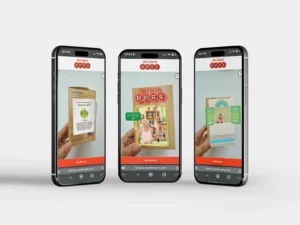
A WebAR platform is software that delivers augmented reality experiences through a mobile browser, without requiring any app installation. Users scan a QR code on packaging, the browser opens, and the AR experience launches instantly. No download. No friction. No app store.
This matters for CPG brands because most shoppers are not going to install a dedicated app to interact with a product they have not yet bought. Browser-based AR removes that barrier entirely. A user standing in a supermarket aisle or opening a delivery box can trigger a full AR experience from a scan in under three seconds.
Beyond that, the platform tier determines what you can do after the scan. Basic WebAR tools render a 3D model or animation. Advanced platforms like HOVARLAY’s Campaigns layer in gamified mechanics, lead capture forms, and real-time analytics. That difference between a visual novelty and a measurable marketing channel is where platform choice becomes a commercial decision.
What to Look for When Evaluating WebAR Platforms in 2026
The right WebAR platform for your brand depends on three things: how fast you can build, what you can measure, and how the pricing scales.
Build speed is where most brands underestimate the gap between platforms. A developer-dependent platform like 8th Wall required engineering resources and often took weeks per SKU. A no-code platform lets a brand manager build and publish an AR experience in hours. For a CPG company managing dozens of SKUs across seasonal campaigns, that difference determines whether AR is a special project or a standard campaign tool.
Measurement is equally important. WebAR generates rich engagement data: scan counts, session duration, interaction depth, and conversion events. Platforms that surface this in a clean dashboard, tied to specific SKUs or campaign windows, let brand teams prove ROI and justify budget.
Pricing transparency is the third filter. Some platforms charge per view, making costs unpredictable at scale. Others charge flat monthly fees that obscure the per-SKU economics. HOVARLAY prices per SKU per month, from a Free tier through Starter at $6-9/SKU to Pro at $39-59/SKU, with Enterprise from $2,500. That structure gives finance teams a clear number to model before any campaign goes live.
How the Leading WebAR Platforms Compare in 2026
The WebAR platform landscape in 2026 has narrowed. 8th Wall, long the developer-preferred option, is being shut down by Niantic. Brands that built on it are now migrating. Blippar remains active and targets enterprise clients with developer teams. Zappar’s content is largely dated to 2023 and its tool skews toward education rather than CPG packaging.
For CPG brands specifically, the relevant comparison is between general-purpose WebAR tools and packaging-first platforms. General tools can render AR content, but they were not designed for the packaging workflow: create once, deploy across SKUs, run a campaign, capture leads, measure conversions, and refresh for the next season.
HOVARLAY falls into the packaging-first category. The Creator tool is a drag-and-drop AR builder built for label and box artwork. The Lens tool handles the browser-based AR delivery. Campaigns adds the gamification layer, including spin wheels and AR treasure hunt mechanics that have driven an average 13.23% campaign conversion rate across HOVARLAY deployments (HOVARLAY internal data, 2025). Insights surfaces all of this in real-time dashboards. You can explore the full platform at /webar-builder/ before signing up.
Why No-Code Matters More Than Ever in 2026
No-code AR is not a compromise. It is the correct choice for most CPG teams in 2026.
The alternative, hiring developers to build WebAR experiences, adds four to eight weeks of lead time per campaign, plus revision cycles and maintenance. That timeline is incompatible with CPG campaign planning, which runs on three to six week cycles tied to retail promotions and product launches.
No-code platforms close that gap. A brand manager who understands the product and the campaign brief can build, preview, and publish an AR experience directly, without waiting for a sprint. Revisions are self-service. Seasonal refreshes take hours, not weeks. Mordor Intelligence identifies rapid AR content creation tools as one of the top near-term growth drivers in the sector (Mordor Intelligence, 2025). No-code WebAR is the practical expression of that shift.
For brands that want to trial AR on one SKU before committing to a full rollout, the no-code model is well suited. There is no developer onboarding cost, no custom build fee, and no minimum contract. HOVARLAY’s Free tier is designed for this. Start on one SKU, validate the mechanics, then scale when the data supports it.
Real-World Validation: What Good WebAR Platform Performance Looks Like
Platform claims are easy to make. Conversion data is harder to fake.
HOVARLAY’s Campaigns product has been deployed across real CPG activations including HERA Bathroom’s CNY red packet AR campaign and the Happy Harvest 10.10 interactive packaging campaign. These are live brand activations with scan counts, session data, and lead capture results that the brands used to evaluate the channel. The 13.23% average campaign conversion rate is a measurable number from real campaigns, not a projected estimate (HOVARLAY internal data, 2025).
When you are evaluating any WebAR platform, ask for deployment examples from the same industry and the same use case. General AR platforms serving entertainment and education will show impressive visual work. But if you are a CPG brand trying to drive re-purchase from packaging, you want evidence that the platform has done that, with real numbers. You can review HOVARLAY case studies at /case-studies/ for deployment detail across campaign types.
The other validation question is support. Platforms that sell well but under-resource onboarding leave brands struggling with the first build. The right platform for 2026 has both the tools and the support model to get a brand from brief to live campaign, without a developer between them.
FAQ
Q: What is the best WebAR platform for CPG brands in 2026?
A: The best WebAR platform for CPG brands combines a no-code builder, browser-based delivery with no app required, and built-in campaign tools for lead capture and analytics. HOVARLAY is built for this use case, with per-SKU pricing and a Free tier to test AR before committing.
Q: How do I choose a WebAR platform without a developer on my team?
A: Look for platforms with drag-and-drop builders, template libraries for common packaging formats, and clear documentation. A strong no-code WebAR platform lets a brand manager build and publish an AR experience in hours. HOVARLAY’s Creator tool is designed for this workflow. You can explore it at /webar-builder/.
Q: What happened to 8th Wall and what should brands use instead?
A: 8th Wall, previously a leading WebAR SDK, is being shut down by its parent company Niantic. Brands that built on 8th Wall are migrating to alternatives. HOVARLAY is a packaging-first alternative with a no-code approach, transparent pricing, and a built-in campaign layer that 8th Wall did not offer.
Q: How much does a WebAR platform cost in 2026?
A: Costs vary. Platforms charging per view are hard to budget at scale. HOVARLAY’s pricing runs per SKU per month: Free for initial testing, Starter at $6-9/SKU, Pro at $39-59/SKU, and Enterprise from $2,500. See the full breakdown at /pricing/.
Q: What is a realistic WebAR campaign conversion rate?
A: Conversion rates depend on the campaign mechanic, the product, and the audience. Across HOVARLAY’s gamified campaign deployments, the average conversion rate is 13.23%, measured as lead captures against total scans (HOVARLAY internal data, 2025). Gamified mechanics such as spin wheels consistently outperform passive AR experiences for lead capture.
Start free at https://dashboard.hovarlay.com/signup
Related reading: AR Packaging Solution: How to Select the Right One | WebAR Builder: Create AR Packaging Without Writing Code