On this page
How CPG Marketers Should Evaluate an AR Packaging Platform: A Buyer’s Decision Framework


Quick Answer
Choosing an AR packaging platform comes down to four areas: substrate compatibility (does it work on your actual packaging formats), no-app delivery (WebAR not app-based), commercial sustainability (the 8th Wall sunset showed this matters), and analytics integration (first-party data into your stack). The 8th Wall sunset on 28 February 2026 has displaced over 3,000 commercial experiences and put platform selection at the top of CPG marketers’ agenda for 2026. The right platform for your portfolio is the one that survives your second and third campaign, not just the first.
Why Platform Selection Became Urgent in 2026
On 20 November 2025, Niantic announced that 8th Wall would begin winding down in 2026. Platform access ends on 28 February 2026. Hosted projects continue to function until 28 February 2027, after which all hosting services are decommissioned and remaining data is deleted. 8th Wall powered over 3,000 commercial experiences during its seven-year run, including campaigns from Pizza Hut, Nike, LEGO, AT&T, and Amazon Prime.
Every brand that built an AR packaging activation on 8th Wall is now facing a migration decision. Every QR code printed on packaging that points to an 8th Wall experience has a hard deadline. The decision can’t be deferred. The category disruption has forced platform selection to the top of every CPG marketing team’s agenda for 2026.
Beyond 8th Wall, the broader signal is that AR packaging platforms are commercial businesses. They can be acquired, repositioned, or shut down. Platform commercial sustainability is now a material procurement criterion, not a checkbox item.
The Four Evaluation Areas That Matter
Strip away the marketing copy and the AR platform decision comes down to four substantive areas.
Substrate Compatibility
Does the platform reliably track on the printed surfaces you actually ship? This is the question most procurement processes underweight. The answer determines whether the campaign works at retail, not in demo conditions.
Specific questions to ask any vendor: What tracking method does the platform use? Marker-based, markerless, NFC, all of the above? What are the limits of marker-based tracking on glossy laminated wrappers? Curved surfaces? Reflective surfaces? Can the platform render reliably on a 24-pack outer carton at supermarket lighting conditions? Can you demonstrate the platform working on my actual packaging samples, not on prepared demos?
Many platforms fail this category quietly. They handle prepared demo packaging cleanly and degrade on production print runs. The way to expose this in evaluation is to send real packaging samples and ask for a live demo on them, not on the vendor’s marketing materials.
No-app Delivery
Does the experience open in a mobile browser via a QR scan, with no app download required? For CPG packaging at retail scale, this is non-negotiable. App-download requirements introduce a friction step that loses 80+ percent of potential users between the scan and the experience load. WebAR is the dominant model in CPG.
Specific questions: Is the experience delivered as WebAR via browser, or does it require an app? What’s the average load time on a 4G mobile connection? What’s the experience on iOS versus Android? Are there device or operating system minimums that would cut off part of my consumer base?
The major no-code WebAR platforms in 2026 all deliver via mobile browser. App-based AR platforms continue to exist but are appropriate for specific premium and loyalty-app use cases rather than mass CPG packaging.
Commercial Sustainability
Is the platform commercially viable beyond the next campaign cycle? The 8th Wall sunset has made this question concrete. The brands now scrambling to migrate would have made different platform decisions if commercial sustainability had been weighted higher in their original procurement.
Specific questions: What’s the platform’s funding status and ownership? Are there announced strategic shifts or acquisition rumours? How long has the platform been in market, and what’s the trajectory of platform releases and feature investment? How many active customers does the platform have, and what’s the customer retention rate? If the platform shut down, what’s the export and migration path for existing projects? Does the platform support standards-based 3D formats (glTF, USDZ) that travel cleanly to other platforms?
No platform can guarantee its own future. What buyers can evaluate is the credibility of continuity, the standards-based portability of assets, and the export options if continuity is broken.
Analytics Integration
Does the platform deliver scan and engagement data into your existing analytics, CRM, and marketing automation stack? First-party data capture is increasingly the primary KPI for AR packaging campaigns. A platform that captures rich data but doesn’t deliver it cleanly into the brand’s downstream systems creates manual data plumbing work that erodes the campaign value.
Specific questions: What analytics are captured natively in the platform? What integrations exist with Google Analytics, GA4, CDPs, CRMs, and marketing automation platforms? Does the platform support webhook integration for real-time event streaming? Does it support custom event tracking for campaign-specific KPIs?
The Uniqode 2026 finding that only 12 percent of marketers currently measure QR campaigns against revenue is partly a measurement infrastructure problem. Choosing a platform with strong analytics integration reduces the gap between scan and revenue attribution.
Red Flags in Vendor Evaluations
Six warning signs surface repeatedly in AR packaging platform evaluations.
Vendor Demos Use Prepared Assets
If the vendor’s demo materials all feature flat printed markers in controlled lighting, ask for a demo on real-world packaging in real-world conditions. Platforms that work on demo assets but degrade in production are common.
Pricing is Opaque or Fully Consumption-based
Some platforms price on scan volume, which can produce unpredictable costs at scale. Others price on seat or project basis. Look for pricing models that align with how your campaigns actually run. Surprise scan-volume bills are a recurring complaint in vendor reviews.
Vendor Can’t Articulate Substrate Limits
If you ask ‘does this work on round bottles’ and the answer is ‘yes, of course,’ the vendor is overselling. Image tracking on round glass and PET bottles has substantive limits. A credible vendor will name those limits clearly.
Platform Lock-in on Assets
If the platform’s project files can only be edited within the platform’s own tooling, with no export path, migration risk is elevated. The 8th Wall sunset is providing buildable code export to mitigate this, but the precedent is that vendors should support standards-based asset portability.
No Clear Product Roadmap
Ask the vendor what they’re shipping in the next 12 months. If the answer is vague or focused entirely on minor UI updates, the platform may be in maintenance mode rather than active investment. The 8th Wall situation reinforces that platforms in maintenance mode can transition to sunset quickly.
Customer References Are Exclusively Pre-launch
Ask for references from customers who shipped campaigns six or twelve months ago, not from customers about to launch. Post-campaign references reveal operational reliability and analytics quality that pre-launch references can’t.
The 8th Wall Migration Timeline That Matters
Specific dates that affect any brand with 8th Wall-hosted AR experiences:
28 February 2026: Platform access ends. Developers can no longer log in, create new projects, or export assets. If you haven’t exported by this date, the window is closed.
28 February 2026 to 28 February 2027: Hosted projects continue to function but are locked. No modifications possible. QR codes pointing to 8th Wall experiences continue to work during this period.
After 28 February 2027: Hosting decommissioned. Existing QR codes pointing to 8th Wall experiences stop working. Remaining data deleted per Niantic’s data retention policy.
Practical migration sequence for any brand still on 8th Wall: audit every active experience, export all assets through Buildable Code Export before 28 February 2026, choose a new WebAR platform with substrate and analytics fit, rebuild experiences on the new platform, and update QR code redirects (if dynamic) or reprint packaging (if static). Dynamic QR codes can be redirected without reprinting. Static QR codes require packaging refresh.
The Procurement Template That Works
Three artefacts make AR platform procurement cleaner.
The Substrate Sample Pack
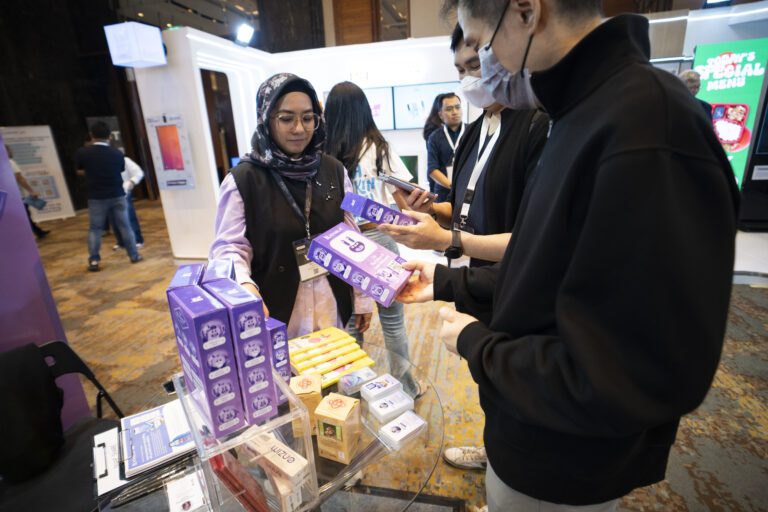
Send each shortlisted vendor a physical sample pack of your actual packaging formats: primary pack, secondary pack, point-of-sale collateral, multi-pack outer, gift carton. Ask for a live demo of the platform working on each substrate. Treat any reluctance as a red flag.
The Integration Map
Document the marketing stack the AR platform needs to integrate with: CRM, marketing automation, web analytics, retailer media networks, loyalty platform. Share the map with vendors and ask for specific integration paths, not generic ‘we integrate with anything’ answers.
The Continuity Assessment
Document the vendor’s funding status, ownership, customer count, and roadmap. Document the asset export path and migration support. If the vendor was acquired or shut down tomorrow, what’s the brand’s recovery plan? The 8th Wall sunset has made this assessment standard practice. Three years ago it would have been considered paranoid. Today it is procurement hygiene.
What Good Looks Like in 2026
The AR packaging platform that should make the shortlist for a CPG brand in 2026 supports WebAR delivery without app download, tracks reliably on the flat packaging formats the brand actually ships, integrates analytics into the brand’s existing marketing stack, exports projects in standards-based formats, has a credible 12-month roadmap, and demonstrates commercial sustainability.
The platform that should not make the shortlist is one that gives a confident ‘yes’ to every question without substantive specifics, prices opaquely, and has no clear export or migration path. The 8th Wall situation has retrained the market. Platform commercial sustainability is now a material decision criterion. Brands that procure with that lens in 2026 will be the ones not migrating again in 2028.
Frequently Asked Questions
Q: How much does an AR packaging platform typically cost?
Platform licensing models vary. SaaS subscriptions for no-code WebAR platforms typically run from a few hundred to a few thousand US dollars per month depending on usage tier and features. Enterprise platforms with custom development support sit higher. Scan-volume-based pricing can produce variable costs that need careful modelling against expected campaign reach. The platform cost is usually small relative to the experience production cost.
Q: Should I work directly with the platform or through an agency?
Both models work. Direct platform engagement is appropriate when the brand has in-house creative and 3D production capability, or for ongoing always-on activations where day-to-day platform management is part of the brand team’s remit. Agency-led engagement is appropriate for campaign-led activations where the agency brings creative concept and the platform delivers the technical layer. Many brands use a hybrid: platform direct for the technology contract, agency-led for individual campaign creative.
Q: What happens to my campaign if the AR platform I chose shuts down?
The 8th Wall sunset has set the precedent. Platforms typically provide a winding-down period during which existing experiences continue to function. They typically offer some form of export or migration path. The exposure is highest for static QR codes printed on packaging that can’t be redirected, which is why dynamic QR codes are increasingly the procurement default. The migration plan should be documented before the platform is chosen, not after a sunset announcement.
Q: Is open-source AR a viable alternative to commercial platforms?
Open-source AR libraries exist and are appropriate for technical teams that can build and maintain their own AR stack. For CPG brand teams without in-house AR engineering capability, the operational cost of running an open-source stack typically exceeds the cost of a commercial platform license. The 8th Wall transition includes some open-sourcing of non-proprietary components, which may produce useful libraries for the broader ecosystem but doesn’t replace platform-level deployment infrastructure.
Q: How long does platform migration typically take?
Migration time varies with experience complexity. Simple WebAR experiences can be rebuilt on a new platform in hours. More complex campaigns with custom 3D, animation, and gamification logic typically take 1 to 3 days to rebuild and test per experience. The harder part is usually re-instrumentation of analytics rather than rebuilding the AR experience itself. Plan for 4 to 8 weeks total migration runway for a portfolio of more than a few active campaigns.
About the author
Kimming Yap is the Co-Founder of HOVARLAY, an experience technology company building AR-enabled packaging and interactive consumer experiences for CPG brands across Southeast Asia.