On this page
AR Packaging for E-Commerce: From Box to Brand Channel
- TL;DR
- The E-Commerce Packaging Problem Nobody Talks About
- What AR Packaging for E-Commerce Actually Means
- Why the Unboxing Moment Is the Highest-Intent Touchpoint in E-Commerce AR Packaging
- How to Set Up AR Packaging for E-Commerce Without Starting from Scratch
- Measuring AR Packaging ROI in an E-Commerce Context
- Frequently Asked Questions


TL;DR
- AR packaging for e-commerce transforms plain delivery boxes into interactive brand experiences: no app required, just a QR code scan.
- Brands using WebAR on packaging report stronger post-purchase engagement and measurable conversion from the unboxing moment.
- HOVARLAY’s Campaigns module delivers gamified AR experiences that average a 13.23% conversion rate from scan to lead capture (HOVARLAY internal data, 2025).
- The global AR market was valued at $120.21 billion in 2025, growing at a 29.7% CAGR through 2033 (Grand View Research, 2026), and packaging is one of the fastest-moving verticals within it.
- You can pilot AR packaging on a single SKU and measure results before committing to a full rollout.
The E-Commerce Packaging Problem Nobody Talks About
Most e-commerce brands invest heavily in getting a buyer to checkout, then lose contact the moment the box ships. The delivery experience goes dark. The brand waits for a reorder that may or may not come.
That gap, from purchase to reorder, is where customer relationships either solidify or dissolve. AR packaging for e-commerce closes that gap by turning the delivery box itself into a live brand channel.
Global retail e-commerce sales exceeded $3.6 trillion in 2025 (Statista, 2025). The brands that win in that environment are not the ones with the best products. They are the ones with the best post-purchase relationships. AR packaging is one of the most direct ways to build that relationship at scale, without adding headcount or rebuilding logistics infrastructure.
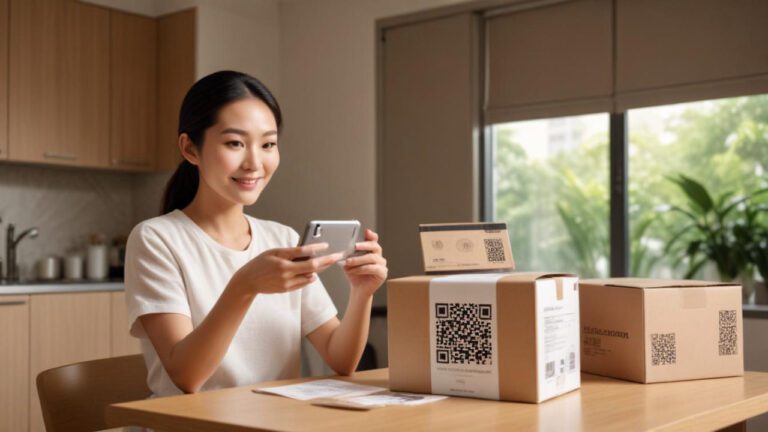
A QR code on the box triggers a browser-based AR experience when scanned. No app required. The buyer opens the box, scans, and the brand is present on their phone screen at the exact moment of peak attention. The delivery box becomes a touchpoint, not just transport.
What AR Packaging for E-Commerce Actually Means
AR packaging for e-commerce is the practice of embedding WebAR triggers, typically QR codes, into delivery packaging so that buyers can access brand-hosted augmented reality experiences at the moment of unboxing.
This is not AR in the abstract sense. It is specifically browser-based AR, meaning the experience loads through the phone’s camera in Safari or Chrome, with no app installation required. That distinction matters enormously for e-commerce, where reducing friction at every step directly affects conversion.
What can those experiences contain? The answer depends on what the brand needs to accomplish. A food brand might use the scan to play a short video showing how the product was sourced. A health and wellness brand might surface usage instructions and a loyalty reward. A beauty brand might trigger a virtual try-on or product tutorial. A CPG brand running a seasonal campaign might show an AR spin wheel offering a discount code or gift with purchase.
HOVARLAY’s platform supports all of these through three core modules: Creator handles the no-code AR experience build; Campaigns handles gamification and lead capture; Insights handles performance tracking. A brand manager can build a delivery box AR experience in Creator (see hovarlay.com/webar-builder/) without writing a single line of code, then push it live with a QR code that prints onto existing packaging artwork.
That last point is what makes this practical for e-commerce at scale. The packaging requires no redesign. The QR code integrates into the existing print run. The entire AR layer is hosted in the cloud and updatable in real time, even after the box has shipped.
Why the Unboxing Moment Is the Highest-Intent Touchpoint in E-Commerce AR Packaging
The unboxing moment is the single highest-attention moment in the e-commerce customer journey. The buyer just paid money. The order has arrived. They are physically handling the product. Their attention is fully on the brand for a window of thirty seconds to two minutes. That is the moment most brands completely waste.
Most brands treat the unboxing moment as a logistics end-state rather than a marketing opportunity. A printed card. Maybe a discount code. At best, a QR code that goes to the homepage. That is the gap AR packaging for e-commerce addresses at the moment of peak intent.
When HOVARLAY deployed gamified AR packaging for Happy Harvest’s 10.10 campaign, the experience triggered at the moment buyers engaged with the product packaging. The format: scan to unlock an AR experience with a spin wheel for rewards. Conversion from scan to lead capture averaged 13.23% across campaigns (HOVARLAY internal data, 2025). For context, the industry average email click-through rate sits well below 3%. An AR scan on packaging at unboxing converts at more than four times that rate because the intent is already there. The buyer is already holding the product. The experience extends a moment they have already started, rather than interrupting them.
The practical implication for e-commerce brands: the box is the best CTA placement you own, and most brands are leaving it blank. An AR QR code on the inner flap, the outer sleeve, or the tissue wrap costs nothing incremental once your experience is live. The creative is reusable across SKUs. The experience is updatable without reprinting. The data comes back through Insights in real time. Visit hovarlay.com/case-studies/ to see how brands have used this format in live packaging campaigns.
How to Set Up AR Packaging for E-Commerce Without Starting from Scratch
Setting up AR packaging for an e-commerce operation does not require a technology overhaul. The fastest path is to pilot AR on one SKU, measure the impact, then expand based on what the data shows.
Start with your highest-volume product. It generates the most scans, which means you get statistically meaningful data fastest. Identify where a QR code placement makes sense in the unboxing sequence: inner box flap, tissue paper, or existing insert card. No new print run required for the pilot.
In HOVARLAY Creator, build the experience using the drag-and-drop interface. Choose the AR format: 3D model overlay, video trigger, gamified spin wheel, or brand story. The platform handles hosting, QR code generation, and analytics setup. Pricing starts from $6 per SKU per month with no per-scan fees: full breakdown at hovarlay.com/pricing/.
Track scan rate, dwell time, and conversion rate to the next action in Insights: discount code claim, loyalty sign-up, or content view. These numbers tell you whether the experience resonates before committing to a broader rollout. For context on no-app AR formats, read hovarlay.com/augmented-reality-articles/no-app-ar-packaging-how-brands-launch-webar-without-making-users-download-anything/.
Measuring AR Packaging ROI in an E-Commerce Context
AR packaging for e-commerce is measurable at every stage, which separates it from most brand experience investments.
The primary metrics are scan rate, session duration, and downstream conversion. Scan rate tells you what percentage of buyers who received a box actually triggered the AR experience. Session duration tells you whether the experience held attention. Downstream conversion tells you whether the experience drove a measurable next action: a loyalty sign-up, a repeat purchase click, a review submission, or a promotional claim.
These three metrics map directly to the stages where e-commerce brands lose revenue: reorder rate, referral rate, and between-purchase engagement. AR packaging addresses all three at the same touchpoint. A buyer who scans, dwells, and claims a loyalty reward is materially more likely to reorder. That relationship is trackable in Insights and comparable against your baseline cohort.
The global AR market is growing at 29.7% CAGR through 2033 (Grand View Research, 2026). Early movers in e-commerce AR packaging are building data and audience relationships that compound over time. Waiting means benchmarking against brands that already have twelve months of scan data and a tested experience library.
Frequently Asked Questions
Q: What is AR packaging for e-commerce?
A: AR packaging for e-commerce is the practice of adding WebAR triggers, usually QR codes, to delivery boxes or inserts so that buyers can access augmented reality brand experiences at the moment of unboxing. The experience loads through the phone’s browser with no app required.
Q: Does AR packaging for e-commerce require reprinting all my delivery boxes?
A: Not for a pilot. Brands typically test AR packaging by updating existing inserts or adding a QR code to the inner flap of the current box. A full print run update comes after pilot data justifies the investment.
Q: How much does AR packaging for e-commerce cost?
A: HOVARLAY’s pricing starts from $6 per SKU per month with no per-scan fees. That covers the AR experience build, hosting, QR code generation, and analytics through the Insights module. Full pricing details are at hovarlay.com/pricing/.
Q: What conversion rates can e-commerce brands expect from AR packaging?
A: HOVARLAY campaigns have averaged a 13.23% conversion rate from scan to lead capture across packaging activations (HOVARLAY internal data, 2025). Results vary by format and audience, but this consistently outperforms standard email marketing benchmarks.
Q: Can AR packaging experiences be updated after the boxes have shipped?
A: Yes. Because the AR experience is hosted in the cloud, brands can update the content, swap the visual, or change the offer at any time without reprinting packaging. Only the QR code destination matters, and that stays constant.
Start free at https://dashboard.hovarlay.com/signup
Related reading: AR QR Code Packaging: Turn Labels Into Experiences | AR Packaging Examples: 10 Brands Getting It Right in 2026