On this page
Digital Packaging: How Brands Turn Labels Into Live Channels


TL;DR
- Digital packaging transforms a physical label into a live digital channel, linking to AR experiences, videos, loyalty programs, and lead capture flows.
- It requires no app download. Users scan a QR code on the label and open the experience directly in their phone browser.
- CPG brands use digital packaging to collect first-party data at the point of sale, turning passive packaging into an active marketing layer.
- Platforms like HOVARLAY Creator let brands build and publish digital packaging experiences without writing a single line of code.
- Campaigns built on digital packaging have reached a 13.23% conversion rate when paired with gamification mechanics (HOVARLAY internal data, 2025).
What Is Digital Packaging?
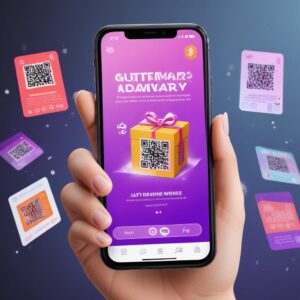
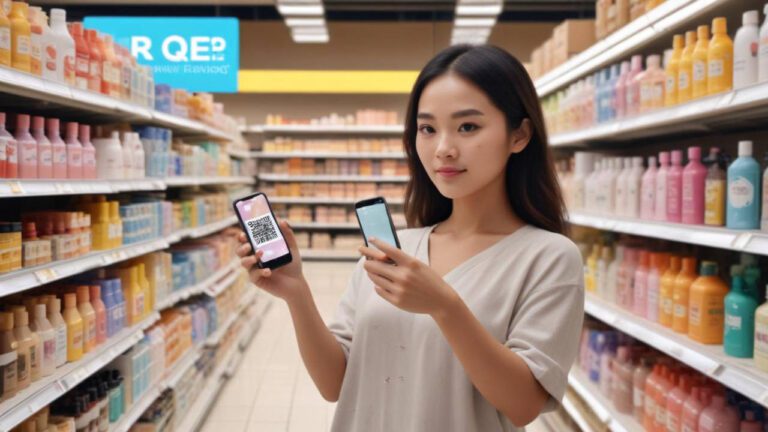
Digital packaging is the practice of connecting physical product packaging to a digital experience through a scannable code, usually a QR code on the label or carton. When a user scans the code, they land on a web-based experience: augmented reality, a product story, a gamified reward mechanic, an ingredient breakdown, or a lead capture form. The physical label does not change. What changes is what happens after the scan.
The term covers a wide range. At its simplest, digital packaging is a QR code that opens a product page. At its most sophisticated, it is a browser-based AR experience overlaying animated content onto the product itself, paired with a spin-the-wheel mechanic that captures user data before delivering a reward. The technology runs in the browser, requires no app, and can be updated without reprinting the label.
For CPG brands, this shift matters because packaging is already in the user’s hands. Every scan is an opted-in interaction from someone who has already paid for the product. That is a fundamentally different engagement surface from paid social or email. The packaging becomes the channel, and every campaign asset is built on top of it.
How Digital Packaging Works in Practice
Digital packaging starts with a code on the label: a QR code, NFC chip, or printed marker. When a user scans it with their phone camera, the device opens a URL in the browser. No app prompt. No download friction. The experience loads in seconds.
The URL points to a hosted experience built on a platform like HOVARLAY Creator. Brands configure what comes next: an AR animation over the product, a short video explaining the ingredients, a loyalty spin wheel offering a discount, or a form collecting an email address in exchange for a coupon. The brand controls the flow. The platform handles rendering, analytics, and data capture.
This separation between the physical label and the digital layer is what makes digital packaging commercially useful. The label is fixed once printed. The digital layer is editable any time. A brand can run a Chinese New Year campaign in January, switch to a product launch in March, and update to a sustainability story in June, all without touching the packaging. The QR code stays the same. The destination changes.
Why CPG Brands Are Adding Digital Packaging Now
The shift toward digital packaging is driven by three converging pressures: the decline of third-party data, rising pressure to justify packaging spend, and user expectation that physical products carry digital context.
On data: brands that relied on third-party cookies have been rebuilding their first-party data strategy since 2023. Digital packaging offers a clean, consent-based collection point. A user who scans a code and enters their email to claim a reward has actively opted in. That data point has a known source, a known product, and a known moment of engagement. It is far more useful than a retargeting pixel on a visited webpage.
On spend: packaging is already a significant cost for CPG brands. For most, it is a sunk cost with no measurable return beyond shelf presence. Digital packaging converts that cost into a performance channel. A PwC survey found that 63% of buyers have purchased directly from a brand’s website after a digital touchpoint, suggesting that users who engage with a brand outside the shelf are more likely to buy directly (PwC Global Insights Pulse Survey, 2023). Packaging that drives that kind of digital engagement gives the CMO a metric to attach to what was previously an unmeasurable line item.
On buyer expectation: a PwC survey of 9,180 buyers across 25 territories found that 43% planned to increase online shopping in the next six months, and that more than 70% were willing to pay more for goods from brands known for transparency and ethical practices (PwC Global Insights Pulse Survey, February 2023). Digital packaging delivers that transparency directly at the point of purchase. A user holding a product can scan it and immediately see where the ingredients came from, how to recycle it, or what the brand is doing with its carbon footprint. That is a positioning advantage that does not require shelf space.
What Digital Packaging Can Carry
The range of what brands can serve through a digital packaging layer is broader than most marketing teams realise. The key categories are as follows.
Augmented reality overlays are the most visually striking option. The user points their phone at the label, and an animation plays on top of it. This might be a mascot appearing on a cereal box, a product story unfolding over a skincare bottle, or a 3D ingredient visualization on a supplement pack. HOVARLAY Lens, the platform’s browser-based AR viewer, renders these experiences without requiring an app. Brands that want to see how this works can explore the no-code build tools at /webar-builder/.
Gamified campaigns are particularly effective for FMCG brands running promotions. A spin-the-wheel mechanic, a scratch card, or a digital treasure hunt drives engagement while capturing leads. HOVARLAY Campaigns includes these mechanics natively, with built-in lead capture and form configuration. The Happy Harvest 10.10 activation and the Summarecon Golden Expo deployment both used gamified WebAR flows to drive qualified sign-ups at scale.
Sustainability and provenance content is becoming standard in food, beverage, and personal care categories. Users increasingly expect to scan a code and find out where the product came from, what the brand’s certifications are, and how to dispose of the packaging. Digital packaging delivers this without requiring a label redesign every time the story changes. HOVARLAY Insights tracks scan rates and completion at each step, so the brand knows exactly where users drop off.
How to Start a Digital Packaging Program
The fastest way to start is to pick one SKU and one campaign mechanic. Not the entire product range. Not a full platform rollout. One label, one QR code, one digital experience.
HOVARLAY’s per-SKU pricing model is designed for exactly this. A brand can start at the Starter tier, test the mechanic for one campaign cycle, measure the scan rate and conversion, and decide what to expand. See the full pricing breakdown at /pricing/.

The build process on HOVARLAY Creator uses a drag-and-drop interface. A brand manager, not a developer, can upload a 3D asset or video, configure the lead capture form, set the reward mechanic, and publish to a QR code link in under an hour. The code goes on the next print run. The campaign goes live when the product hits shelves. For real-world examples of how other brands have run these activations, including scan rates and conversion data, see the HOVARLAY case studies at /case-studies/.
Frequently Asked Questions
What is digital packaging in simple terms?
Digital packaging is physical product packaging linked to a digital experience through a QR code or similar trigger. The user scans the code and opens a web-based experience in their phone browser. No app required. The physical label stays the same; the digital content can be updated without reprinting.
Does digital packaging require a mobile app?
No. Browser-based digital packaging runs entirely in the phone’s native browser. The user scans the QR code, the browser opens, and the experience loads. There is no app prompt. This is the key difference between WebAR-based digital packaging and older app-dependent approaches.
What kinds of experiences can digital packaging deliver?
Augmented reality animations, gamified prize mechanics, loyalty sign-up flows, provenance stories, sustainability information, recipe content, and lead capture forms. The brand configures what happens when the user scans the code. The same QR code can point to different experiences at different points in the year.
How do brands measure the performance of digital packaging?
Platforms like HOVARLAY Insights track scan volume, session duration, completion rate, and campaign conversion at the individual SKU level. Brands can see how many scans a product generates per week, what percentage of users complete the experience, and how many convert into leads or loyalty registrations.
How much does digital packaging cost to set up?
HOVARLAY’s per-SKU pricing starts at $6 per SKU per month on the Starter plan. There are no per-view fees. Full pricing details are at /pricing/.
CTA: Ready to turn your packaging into a live digital channel? Start free at https://dashboard.hovarlay.com/signup
Related reading: AR Packaging Examples | AR QR Code Packaging