On this page
AR Packaging in Indonesia: How Local Brands Are Winning With Interactive Labels
- AR Packaging in Indonesia: How Local Brands Are Winning With Interactive Labels
- How Indonesian CPG Brands Are Using AR Packaging Today
- What to Look for in an AR Packaging Platform
- How to Pilot AR Packaging in Indonesia: A Practical Start
- AR Packaging and Indonesia’s Evolving Retail Landscape
- Frequently Asked Questions: AR Packaging in Indonesia


TL;DR:
– Indonesia has 212 million internet users and 356 million active mobile connections, making it one of the most mobile-ready markets in Southeast Asia for AR packaging (DataReportal, 2025).
– AR packaging in Indonesia lets CPG brands turn physical labels into digital experiences that users scan with any smartphone — no app download required.
– The global AR market was valued at USD 120.21 billion in 2025, with Asia Pacific identified as the fastest-growing region (Grand View Research, 2025).
– Indonesian CPG brands can pilot AR on a single SKU using platforms like HOVARLAY, which supports no-code AR creation with built-in campaign tools and analytics.
– HOVARLAY’s Campaigns product averages a 13.23% conversion rate — a measurable return brands can see from a first pilot run (HOVARLAY internal data, 2025).
AR Packaging in Indonesia: How Local Brands Are Winning With Interactive Labels
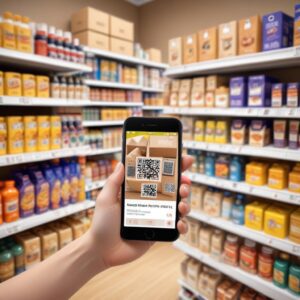
Indonesia is one of the most digitally connected countries in Southeast Asia. With 212 million internet users and 356 million active mobile connections as of early 2025, the country’s buyers are on their phones constantly (DataReportal, 2025). That’s a precise environment for AR packaging — a format that turns a printed label into a live digital experience, triggered by a smartphone scan. No app. No friction. Just a QR code or image scan that opens a brand experience in the browser.
For Indonesian CPG brands operating in a high-competition, price-sensitive market, AR packaging offers something packaging alone cannot: a reason to stay engaged after the point of purchase. This guide covers what AR packaging looks like in Indonesia, why the format fits the market, and how brands can start without a large technology team.
What Is AR Packaging and Why Does It Fit the Indonesian Market?
AR packaging is a technology that attaches a digital layer to physical product packaging. When a user scans a code or targets a label with their phone, the device opens a browser-based experience — a 3D animation, a recipe, a game, a loyalty form. The experience runs in the phone’s browser. No app installation required.
This matters in Indonesia because app download rates remain a friction point for brand engagement. Users are comfortable with browsers, social media, and QR codes. AR packaging meets them where they already are: their phone, a scan, done.
The global AR market was valued at USD 120.21 billion in 2025, growing at a projected CAGR of 29.7% through 2033. Asia Pacific is the fastest-growing region within that figure (Grand View Research, 2025). The infrastructure driving that growth — mobile penetration, affordable Android devices, widespread 4G coverage — is already in place across Indonesia’s major urban centres. Surabaya, Bandung, Medan, and Makassar are not just secondary cities. They are active commercial markets with buyers ready for mobile-first brand experiences.
For brands already selling through modern trade, e-commerce, or direct-to-buyer channels, AR packaging is not a future investment. It is a present-tense tool that can attach to existing stock with a single printed code.
How Indonesian CPG Brands Are Using AR Packaging Today
Indonesian CPG brands are using AR packaging across four primary use cases: product storytelling, promotional campaigns, loyalty mechanics, and ingredient or sustainability transparency.
Product storytelling is the most straightforward entry point. A food or beverage brand adds a QR code to its label that opens a short animated story about the product’s origin or production process. Users scan during or after purchase. The brand gets engagement data. The user gets a reason to remember the product. This works particularly well in the food and beverage category, where provenance and quality signals matter in purchase decisions.
Promotional campaigns tied to seasonal moments are especially effective in Indonesia. Events like Harbolnas (the national online shopping day), Lebaran, and year-end festive periods drive high purchase volumes. An AR experience tied to a scan mechanic — spin a wheel, reveal a discount, collect a gift — turns packaging into a campaign channel without printing new packaging for each campaign. The QR code stays the same. The experience updates behind it.
Loyalty mechanics via AR are gaining traction among Indonesian brands that sell repeat-purchase products: personal care, food staples, household goods. A scan-to-earn point system attached to packaging creates a direct brand-to-buyer relationship outside of retail platforms. That relationship has commercial value because it is first-party data: contact details, scan locations, product preferences collected at the moment of product use.
HOVARLAY’s Campaigns product, which powers gamified AR experiences including spin wheels and treasure hunts, has generated an average 13.23% campaign conversion rate across deployments (HOVARLAY internal data, 2025). For a brand running a loyalty collection campaign in Indonesia, that is a meaningful return on a format that costs less than a single social media influencer placement.
You can explore how these campaign mechanics work at /case-studies/.
What to Look for in an AR Packaging Platform
The platform you choose for AR packaging in Indonesia needs to fit the realities of the market: modest in-house tech capacity, speed-to-market pressure, and the need for experiences that run well on mid-range Android devices.
The first criterion is no-code creation. Most Indonesian brand teams do not have developers on staff. A platform that requires JavaScript knowledge, SDK integration, or custom hosting is not realistic for a brand manager working on a product launch deadline. Look for drag-and-drop or template-based creation flows that let a non-technical team build and publish an AR experience in hours, not weeks. HOVARLAY Creator is built for exactly this workflow. You can explore the builder at /webar-builder/.
The second criterion is WebAR support — specifically, browser-based AR without app download requirements. Any platform that requires users to install an app is adding a step that will reduce scan conversion. Indonesia’s internet users are heavy mobile users, but app fatigue is real. WebAR removes that barrier entirely.
The third criterion is built-in analytics. An AR experience without data is a decoration. You need to know how many users scanned, how long they engaged, how many completed a call to action. HOVARLAY Insights provides per-SKU scan data and campaign conversion tracking.
That data is what justifies the platform cost to a finance team and informs the next campaign decision.
Pricing transparency matters too. HOVARLAY’s per-SKU model — starting from USD 6 per SKU per month — makes it straightforward to budget a pilot. You pick one product, run one experience, measure results. If it works, you expand. See full pricing at /pricing/.
How to Pilot AR Packaging in Indonesia: A Practical Start
The most effective way to start with AR packaging in Indonesia is to pilot on one SKU, not the entire range.
Choose a product with high repeat-purchase frequency or strong social engagement. A snack brand, a personal care product, a beverage in a visible retail position. Attach a QR code to the next print run, or use a sticker-based approach if you need speed. Build a single AR experience using a no-code platform like HOVARLAY Creator. Set a clear campaign objective: sign-ups, shares, or redemption events. Run the pilot for 60 days. Measure.
The data from a single-SKU pilot tells you three things: whether your buyers are scanning (reach), whether they are completing the experience (engagement), and whether they are converting on the campaign objective (ROI). That data makes the case for expanding to additional SKUs or building a full loyalty program. It also identifies which experience type performs best in your specific product category and buyer demographic.
HOVARLAY’s Lens product handles the AR viewer layer, ensuring experiences load quickly on Indonesian mobile networks and mid-range devices. Creator handles the build. Campaigns handles the gamification and lead capture. Insights handles the measurement. That full stack is available from the same platform, at a price point accessible to Indonesian MSMEs and regional brand teams.
A real example of this multi-product approach: HOVARLAY’s Happy Harvest campaign, run during the 10.10 shopping event, used Campaigns’ gamification mechanics to drive buyer engagement during peak purchase volume. The AR layer turned a promotional moment into a measurable lead generation event.
Start with one product. Prove the model. Scale what works. Start free at https://dashboard.hovarlay.com/signup
AR Packaging and Indonesia’s Evolving Retail Landscape
Indonesian retail is not standing still. The growth of modern trade, the dominance of platforms like Tokopedia and Shopee for FMCG distribution, and the expansion of quick-commerce channels mean that physical packaging has to work harder than it did five years ago. It is often the last brand touchpoint before a purchase decision in-store, and one of the first brand touchpoints after a purchase decision online.
AR packaging bridges that gap. In a physical store, it activates the moment a buyer holds the product. In an e-commerce context, the packaging is what arrives at the door — and AR turns that arrival moment into a campaign event. A buyer who scans their just-delivered package and receives a loyalty reward, a recipe, or a seasonal experience is a buyer who has a reason to remember the brand beyond the product itself.
Indonesia’s 143 million social media users (DataReportal, 2025) create an additional amplification channel. AR experiences that are shareable, visually distinctive, or reward-driven can generate organic reach when buyers post their scans. That earned reach costs nothing beyond the AR experience itself. It is a format that fits both the media habits and the commercial realities of the Indonesian market.
For further context on how AR is reshaping packaging strategy in the region, see the published case studies at /case-studies/ and the full comparison of WebAR vs app-based approaches at /webar-vs-app-based-ar/.
Frequently Asked Questions: AR Packaging in Indonesia
Q: Do Indonesian buyers need to download an app to use AR packaging?
A: No. WebAR-based packaging experiences open directly in the phone’s browser after a QR code scan. No app installation is required. This removes the single biggest friction point for mobile engagement in the Indonesian market.
Q: What types of CPG products work best with AR packaging in Indonesia?
A: Food and beverage, personal care, household goods, and health products all perform well. Products with high purchase frequency or strong seasonal relevance benefit most, because repeat scans build cumulative campaign data and loyalty engagement.
Q: How much does it cost to pilot AR packaging in Indonesia?
A: HOVARLAY’s Starter plan begins at USD 6–9 per SKU per month. A single-SKU pilot requires no developer resource and can be live within a day using the no-code Creator tool. See full details at /pricing/.
Q: Can AR packaging integrate with Indonesian e-commerce platforms?
A: AR packaging works independently of any e-commerce platform. The experience is triggered by a QR code on the physical packaging, which means it activates whether the product was bought through Tokopedia, Shopee, a supermarket, or a brand’s own direct channel.
Q: How does HOVARLAY support Indonesian brands specifically?
A: HOVARLAY is co-founded and operated from Southeast Asia with active operations in Singapore and Indonesia. The platform is designed for CPG brands in the region, with per-SKU pricing that fits Indonesian brand budgets, case study data from local deployments, and support for campaign formats that align with key Indonesian shopping events.
Related reading: AR for Retail | AR Packaging Examples