On this page
AR for Luxury Brands: How Packaging Becomes a Brand Experience


AR for Luxury Brands: How Packaging Becomes a Brand Experience
Key Takeaways
- AR for luxury brands works differently from mass-market activations: the goal is exclusivity and storytelling, not gamification and lead volume.
- The physical luxury product becomes an entry point to a curated digital experience — one that only product owners can access.
- AR packaging lets luxury brands deliver rich, evolving content from a finite physical surface, updated remotely without reprinting.
- Luxury AR experiences that feel gimmicky or poorly executed will damage brand perception; those that feel considered and on-brand will deepen it.
- Piloting on one hero product with a clear narrative objective is the right starting point for luxury brands exploring AR packaging.
Luxury brands have always understood that the product is not just a product — it is a story, a signal, and an experience. The packaging is part of that. The weight of the box, the texture of the paper, the precision of the embossing — these details communicate something that cannot be said in a headline. AR packaging for luxury brands extends that communication into the digital layer, without replacing or compromising the physical one. Done well, it transforms the act of unboxing or purchasing into something more: an exclusive digital experience that only the person holding the product can access.
Why Luxury Brands Approach AR Differently
Mass-market AR packaging is optimised for reach and volume: the more users scan, the more leads captured, the higher the conversion rate. Luxury AR packaging is optimised for depth: fewer but more meaningful interactions, stronger brand relationships, and the reinforcement of exclusivity as the brand’s core value. These are fundamentally different goals, and they require fundamentally different experience designs.
A spin wheel prize mechanic — effective for an FMCG snack brand trying to capture first-party data — would feel incongruous on a luxury fragrance bottle. The buyers who purchase that fragrance are not motivated by a chance to win a voucher. They are motivated by exclusivity, craft, and the feeling of being an insider. The AR experience needs to deliver that feeling, not undermine it with a generic gamification mechanic lifted from a mass-market playbook.
This distinction is not just aesthetic — it is commercial. A luxury brand’s equity is its most valuable and most fragile asset. An AR experience that feels cheap, gimmicky, or misaligned with the brand voice will cost more in perception damage than it gains in engagement data. The standard for luxury AR is higher, and the planning process needs to reflect that from the brief stage.
What Luxury AR Packaging Actually Looks Like
The strongest luxury AR experiences share three characteristics: they are exclusive, they are narrative, and they are seamless. Exclusive means the content is genuinely only accessible to people who own the physical product — not the same content available on the brand’s website or social channels. Narrative means the experience tells a story that adds meaning to the object the user is holding. Seamless means the experience loads quickly, looks polished, and requires no explanation or instruction.
A luxury leather goods brand might use AR to show the atelier where the product was made — a guided visual journey through the hands that stitched the bag the buyer is holding. A fine spirits brand might surface the master distiller’s notes for that specific expression, visible only by scanning the bottle. A luxury skincare brand might unlock a personalized consultation sequence triggered by scanning the product packaging. None of these mechanics are mass-market. All of them add genuine value to the ownership experience.
The common thread is that the AR experience is an extension of the product’s value proposition, not a separate promotional layer attached to it. The buyer does not feel marketed to. They feel rewarded for owning the product. That is the design target every luxury AR experience should be held to.
Storytelling as the Core Mechanic
Luxury brands have always been story-driven. The challenge has been that physical packaging can only carry so much story. Legal copy, ingredient lists, regulatory requirements, and barcode placement consume the available surface before brand narrative gets meaningful space. AR removes that constraint entirely.
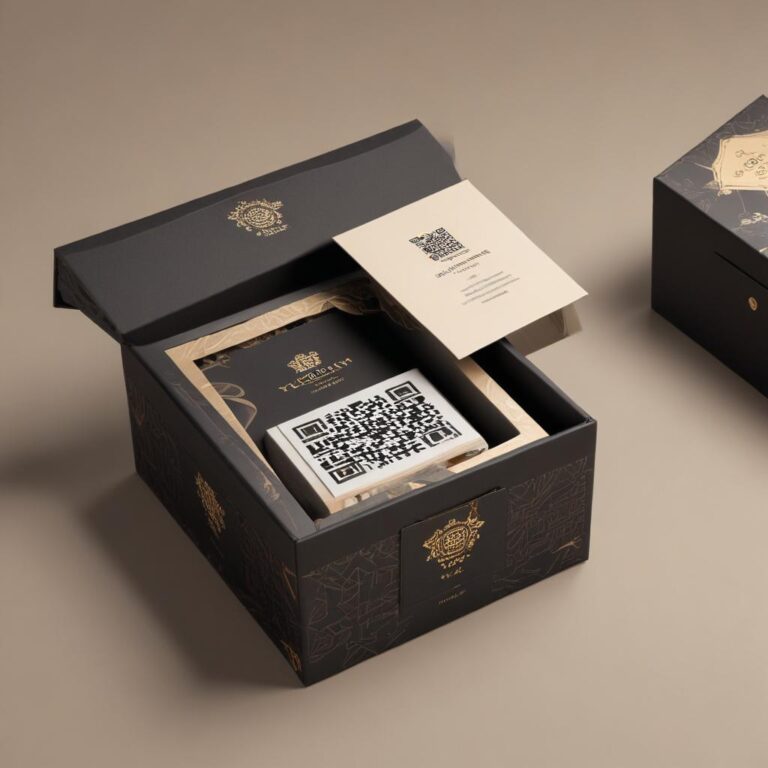
A QR code occupying less than a square centimetre on the packaging can unlock a full visual narrative: the sourcing journey, the production process, the founding story, the artisan behind the product, the cultural context that makes this object meaningful. That narrative can be as long as it needs to be, presented in the format that serves it best — video, animation, interactive map, or curated editorial — and updated as the brand’s story evolves, without any change to the physical packaging.
This is the operational advantage luxury brands often underestimate: the ability to evolve the digital story remotely. A seasonal narrative for the holiday collection can replace the heritage story for Q4. A collaboration with an artist or designer can be introduced into the experience to coincide with the launch. The physical product remains unchanged. The digital layer reflects the moment.
Exclusivity as a Design Principle
The most compelling luxury AR experiences are built around a simple principle: this is for you specifically, because you own this object. That exclusivity is a design choice. The experience is crafted to feel like a private reveal, not a public broadcast.
Practical ways to reinforce exclusivity in a luxury AR experience include: content that is not available anywhere else — not on the website, not on social channels; language that addresses the holder directly; and access to information that is genuinely proprietary — archival material, production details, or content that has never been published through other channels.
Some luxury brands use AR as a product authentication layer — the scan experience confirms the product is genuine and surfaces its provenance record. For high-value items where counterfeiting is a concern, this adds a functional dimension to the luxury AR experience that mass-market brands do not need but luxury buyers actively value. It transforms the QR code from a marketing tool into a trust signal.
Making the Business Case for Luxury AR
The business case for AR packaging in the luxury context is not primarily about conversion rates or lead volume. It is about brand equity: deepening the relationship with buyers who already chose the brand, giving them a reason to share the experience with others at a similar level of brand affinity, and reinforcing the perception that this brand invests in the details.
That said, AR packaging does generate measurable data even for luxury brands: scan rates per unit sold, engagement time, completion rates for narrative sequences, and — if an opt-in mechanic is included — direct contact data from buyers who want to hear from the brand. That data has commercial value, particularly for brands that sell through wholesale or multi-brand retail channels where direct buyer relationships are otherwise difficult to build.
The entry cost is lower than most luxury brand marketing budgets assume. HOVARLAY’s per-SKU pricing model allows a luxury brand to pilot AR on one hero SKU without committing to a platform-wide rollout. The first experience can be tested, measured, and refined before the decision to extend across the range. See how brands are using HOVARLAY →
Frequently Asked Questions
How is AR for luxury brands different from mass-market AR packaging?
Luxury AR focuses on exclusivity, storytelling, and brand depth rather than lead volume, gamification, and conversion rate. The experience design, content, and mechanic all reflect the brand’s premium positioning. A spin wheel that works for a snack brand would feel out of place on a luxury fragrance.
What kind of AR experiences work for luxury packaging?
Experiences that add genuine value to ownership: behind-the-scenes production content, craftsmanship stories, founder narratives, limited-edition unlocks, authentication layers, and personalized content that is only accessible to product owners. The test is whether the experience makes the buyer feel like an insider.
Will AR packaging look cheap on a premium product?
Only if it is designed cheaply. A QR code is visually neutral — it can be integrated tastefully into packaging design. The experience quality is determined by the content and the platform, not the QR code itself. A well-designed luxury AR experience reinforces premium brand perception rather than undermining it.
Can luxury brands use AR for product authentication?
Yes. AR packaging can be configured to surface provenance records, serial number data, and authentication signals when the product is scanned. This is particularly relevant for high-value items in categories where counterfeiting is a concern, such as luxury leather goods, watches, and fine spirits.
How should a luxury brand start with AR packaging?
Start with one hero product or limited edition. Define a single narrative objective — brand story, craftsmanship detail, or exclusive content unlock. Build the experience to reflect the brand voice precisely. Test it with a small user group before rollout. Measure engagement time and completion rate rather than conversion volume. Refine, then scale.
Build a luxury AR packaging experience that reflects your brand. Start free on HOVARLAY →