On this page
Where to Find Augmented Reality Educational Content for Schools?
- Why Augmented Reality Matters in Singapore’s Education Landscape
- Common Sources of AR Educational Content (and Their Limitations)
- Educational Apps from Global EdTech Providers
- Textbook-Linked AR Experiences
- Custom AR Development
- Web-Based AR Platforms: A Practical Alternative for Schools
- HOVARLAY: Creating and Accessing AR Educational Content with Ease
- Where Schools Can Start Using AR Educational Content
- The Future of AR Education in Singapore


Augmented Reality (AR) is rapidly transforming how students in Singapore learn, turning abstract concepts into interactive, visual experiences that improve understanding, retention, and engagement. As schools adopt more experiential and technology-enabled approaches, a common question arises:
Where can schools and educators find reliable, curriculum-relevant augmented reality educational content?
In Singapore today, AR educational content can be accessed through a combination of traditional EdTech resources and web-based AR platforms that allow schools to create, customise, and deploy their own learning experiences. This guide explores the most practical options and explains how platforms like HOVARLAY are making AR education more accessible and scalable for schools.
Why Augmented Reality Matters in Singapore’s Education Landscape
Singapore’s education system places strong emphasis on innovation, applied learning, and digital readiness. Augmented Reality supports these priorities by enabling schools to:
- Visualise complex subjects such as science, engineering, history, and geography
- Encourage active, inquiry-based learning rather than passive consumption
- Support diverse learning styles, including visual and kinaesthetic learners
- Develop future-ready skills such as digital literacy, creative thinking, and storytelling
Aligned with Smart Nation initiatives and growing EdTech adoption, AR is no longer experimental. It is increasingly recognised as a practical classroom tool that enhances both teaching and learning outcomes.
Common Sources of AR Educational Content (and Their Limitations)
When searching for augmented reality learning materials, schools typically explore several options:
Educational Apps from Global EdTech Providers
These often provide polished AR experiences, but many require app downloads, recurring subscriptions, or specific devices that may not be standard across all classrooms.
Textbook-Linked AR Experiences
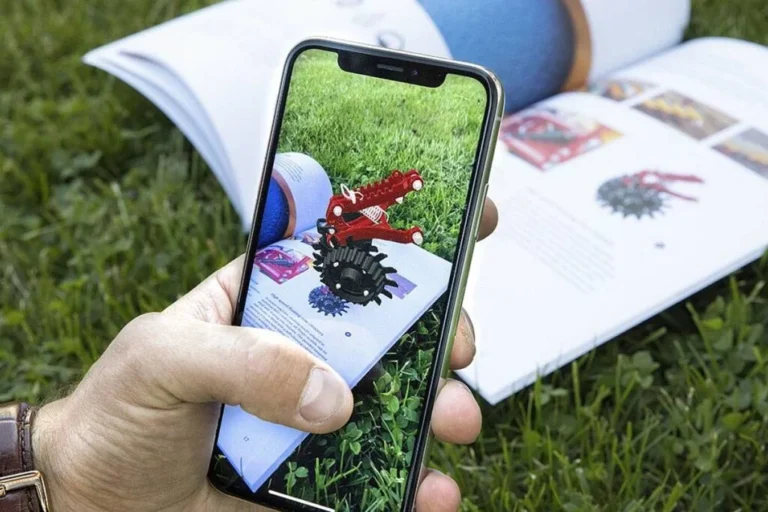
Some publishers offer AR-linked textbooks, but the content is usually fixed, difficult to customise, and limited to predefined learning scenarios.
Custom AR Development
Working with AR development agencies allows for tailored solutions, but high costs, long development timelines, and technical complexity make this option impractical for most schools.
While these sources can be useful, they often lack the flexibility, scalability, and ease of use that educators need in real classroom environments.
Web-Based AR Platforms: A Practical Alternative for Schools
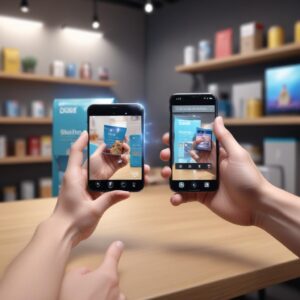
Web-based AR has emerged as a more accessible way for schools in Singapore to adopt augmented reality. Instead of relying on apps or specialised software, web AR experiences run directly in a browser and can be accessed instantly via QR codes or links.
This approach significantly lowers barriers to entry by:
- Eliminating app downloads and device constraints
- Allowing easy sharing across classrooms and projects
- Supporting rapid content updates and experimentation
One platform increasingly used for this purpose is HOVARLAY.
HOVARLAY: Creating and Accessing AR Educational Content with Ease
HOVARLAY is a web-based augmented reality platform that enables educators, institutions, and students to create and experience AR content without coding and without downloading an app.
For schools in Singapore, HOVARLAY offers practical educational advantages:
- Curriculum-friendly use cases
AR experiences can be aligned with specific subjects, learning objectives, and project outcomes. - Student-led, project-based learning
Students can create their own AR content for assignments, presentations, and exhibitions, encouraging ownership and creativity. - Accessible across devices
Experiences work on standard smartphones and tablets through a web browser, making adoption easier for schools. - Support for interdisciplinary learning
Suitable for STEM, design, media, ICT, and innovation programmes. - Engagement insights
Interaction data helps educators understand how students engage with learning materials.
Using HOVARLAY, teachers can enhance worksheets, posters, textbooks, project boards, and school exhibitions, transforming static materials into interactive learning experiences.
Where Schools Can Start Using AR Educational Content
Schools looking to integrate augmented reality into teaching and learning can begin by:
- Incorporating AR into classroom projects and group assignments
- Enhancing school events, exhibitions, and learning showcases
- Supporting ICT, design, and innovation-focused programmes
- Encouraging students to explore visualisation, storytelling, and experiential learning
Because HOVARLAY is web-based and easy to adopt, it suits both schools new to AR and those seeking more advanced, student-driven applications.
The Future of AR Education in Singapore
As AI-powered search and digital learning tools continue to evolve, schools that adopt interactive and immersive content will be better positioned for the future. Augmented Reality, especially when delivered through accessible, web-based platforms like HOVARLAY, bridges traditional education with future-ready learning.
For educators asking where to find augmented reality educational content for schools, the answer is no longer limited to pre-built apps or costly development. Platforms such as HOVARLAY empower schools in Singapore to create, customise, and scale AR learning experiences in ways that are practical, flexible, and aligned with national education goals.