On this page
What Is WebAR? How Browser-Based AR Is Replacing Apps
- What Is WebAR?
- How Does WebAR Work?
- WebAR vs App-Based AR: Why No-Download Wins
- Why WebAR Is Growing in 2026
- What Can WebAR Do?
- Building WebAR Without Code
- Frequently Asked Questions
- What devices support WebAR?
- Is WebAR the same as AR filters on Instagram or Snapchat?
- How fast does a WebAR experience load?
- Does WebAR work offline?
- What is the difference between WebAR and a regular QR code experience?


- WebAR is augmented reality that runs entirely in a smartphone browser — no app download required
- It works by pointing your phone’s camera at a trigger (usually a QR code) and the experience loads instantly
- App-based AR has a steep drop-off problem: most users won’t download a dedicated AR app
- WebAR removes that friction entirely — it’s becoming the dominant format for brand AR experiences
- HOVARLAY is a no-code WebAR platform built specifically for CPG packaging
What Is WebAR?
WebAR is augmented reality that runs directly in a mobile web browser. No app to download, no account to create — just scan and experience.
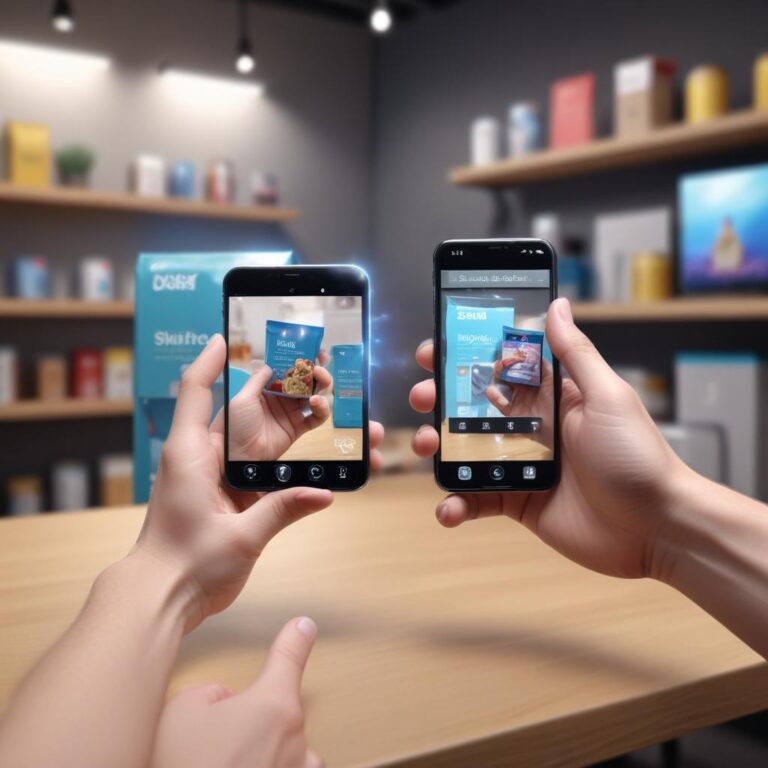
The technology uses JavaScript, WebGL, and your phone’s camera to overlay digital content onto the real world. From a user perspective, it’s seamless: scan a QR code on a product, a webpage opens, and digital content appears layered over whatever your camera is pointed at.
From a brand perspective, it’s a distribution breakthrough. Instead of asking users to find, download, install, and open a dedicated app — which most won’t do — you just put a QR code on your packaging and the experience is one scan away.
How Does WebAR Work?
WebAR works by loading a lightweight web application in a browser that accesses the phone’s camera, processes the visual input in real time, and renders digital content aligned with the physical world — all without leaving the browser.
- WebGL — renders 3D graphics in the browser without plugins
- WebRTC — accesses the device camera via the browser
- JavaScript frameworks — handle AR detection, tracking, and rendering logic
- Cloud hosting — the AR experience lives on a server, loads on demand, updates without republishing
WebAR vs App-Based AR: Why No-Download Wins
The fundamental advantage of WebAR over app-based AR is removal of friction. Every step you remove between a user and an experience increases the number of people who complete it.
App-based AR requires: finding the app, downloading it (often 50MB+), installing, creating an account, granting permissions, opening the app, and finding the AR feature. WebAR requires: scanning a QR code.
Studies consistently show that requiring a download reduces conversion rates by as much as 80% compared to a browser-based alternative.
Why WebAR Is Growing in 2026
The global AR and VR market is valued at USD 75.18 billion in 2025 and projected to grow to USD 118.79 billion in 2026 — and WebAR is increasingly the delivery format of choice for brand activations. (Source: Precedence Research, December 2025)
- App fatigue is real — users have more apps than they use. The barrier to downloading a new branded app has never been higher.
- QR code literacy is now universal — the pandemic permanently shifted behaviour. Scanning is now a default, not a novelty.
- No-code platforms made WebAR accessible — any brand team can now build and publish a WebAR experience without writing code.
- 8th Wall’s shutdown is reshaping the market — a significant portion of the WebAR market is actively looking for alternatives.
What Can WebAR Do?
WebAR experiences range from simple image animations to fully interactive 3D product visualisations and gamified campaigns.
- Brand storytelling — animated characters and stories that bring packaging to life
- Product information — ingredient breakdowns, sourcing stories, how-to guides
- Gamification — spin-the-wheel, treasure hunts, mini-games that drive lead capture
- Virtual try-on — beauty and fashion applications
- Loyalty and rewards — scan-to-earn points, exclusive content unlocks
HOVARLAY’s Campaigns product turns WebAR into active lead generation — with an average 13.23% conversion rate across campaigns.
Building WebAR Without Code
You no longer need a developer to create and publish a WebAR experience. HOVARLAY Creator lets brand teams build, customise, and launch WebAR packaging experiences from a drag-and-drop interface.
- Upload your packaging artwork or product image
- Choose your experience type (animation, game, product story, lead capture)
- Customise — add assets, set colours, write copy
- Preview on your phone in real time
- Generate and download your QR code
- Add it to your packaging
Frequently Asked Questions
What devices support WebAR?
Any modern smartphone with a camera and a current browser (Chrome, Safari, Firefox) supports WebAR. This covers virtually all devices in use today.
Is WebAR the same as AR filters on Instagram or Snapchat?
No. Social AR filters run inside specific apps. WebAR runs in any browser without any app. WebAR gives brands full ownership of the experience and the data.
How fast does a WebAR experience load?
2-4 seconds on a standard mobile connection. HOVARLAY-hosted experiences are optimised for mobile performance.
Does WebAR work offline?
No. WebAR requires an internet connection. For packaging use cases, this is rarely a barrier.
What is the difference between WebAR and a regular QR code experience?
A regular QR code links to a web page. WebAR uses the phone’s camera to overlay digital content onto the physical world. WebAR is immersive and interactive — a standard QR link is not.
No app. No developer. No reprint needed. Start building WebAR for free →