On this page
What Is AR Packaging? A Complete Guide for Brands in 2026


What Is AR Packaging?
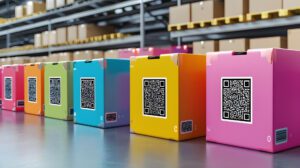
AR packaging is product packaging that activates interactive digital content — animations, games, videos, or data capture forms — when a user points their smartphone camera at it.
The trigger is typically a QR code printed on the label. When scanned, the phone’s browser opens an augmented reality experience: a 3D product demo, a gamified prize wheel, a recipe video, or an origin story layered over the physical product. The physical packaging becomes a live digital channel.
This is not a new concept in principle — brands have experimented with packaging interactivity for years. What changed is the technology. WebAR eliminated the requirement for a dedicated app, which was the single biggest barrier to mass-market adoption. Today, a user in a supermarket can scan a product and be inside a fully interactive AR experience within 3 seconds, using nothing but the browser already on their phone.
The result is that AR packaging has shifted from a novelty reserved for premium brand activations to a practical, scalable marketing channel for any brand that sells physical products.
How AR Packaging Works
AR packaging works through a three-layer system: a physical trigger on the product, a WebAR delivery platform that serves the experience, and a browser on the user’s smartphone that renders it.
The physical trigger is most commonly a QR code. It can also be an image marker — a distinctive region of the packaging artwork that the platform recognises as a scan target. When the user’s camera reads the trigger, it resolves a URL hosted on the AR platform’s servers, which delivers the WebAR experience directly to the browser.
The experience itself can contain almost anything a brand needs: 3D animations, video playback, game mechanics, forms for lead capture, links to purchase, or loyalty stamp functionality. The platform handles rendering, hosting, and data collection. The brand manages content through a no-code builder without touching any of the underlying technology.
From the user’s perspective, the interaction is frictionless. Scan, tap, engage. No installation. No account creation. No waiting. The experience is ephemeral in the best sense: it appears when needed and disappears when done, leaving the data it captured in the brand’s dashboard.
Why Brands Use AR Packaging
Brands implement AR packaging for three core reasons: engagement uplift, first-party data capture, and operational flexibility — all from a packaging touchpoint they already own.
Engagement Uplift
Physical packaging that activates AR sees significantly higher user interaction than passive packaging. Users who choose to scan are by definition self-selecting for engagement — they want to interact. Dwell time on AR packaging experiences is 4 to 8 times longer than for standard product pages (Deloitte Digital, 2025). That extended engagement window is where brand preference is built.
HOVARLAY’s Campaigns product records an average conversion rate of 13.23% across gamified AR packaging campaigns — meaning roughly 1 in 8 users who scan complete a lead capture action. For context, average display advertising conversion rates sit at 0.1% (Google, 2025). The gap is not incremental; it is structural.
First-Party Data Capture
AR packaging turns every product scan into a potential data collection event. When users opt in during an AR experience — entering their email for a prize, registering for a loyalty program, completing a product quiz — they generate first-party data: owned by the brand, collected with consent, tied to a real product interaction.
This matters acutely now. Third-party cookies are effectively dead. Retailers are restricting data sharing. Brands that build first-party data pipelines through owned channels have a durable competitive advantage. AR packaging is one of the few touchpoints where brands interact directly with users post-purchase, at high engagement, with an opt-in mechanism built in.
Operational Flexibility
AR experiences update digitally. A brand can change a campaign — swap a prize promotion for a recipe video, update seasonal messaging for Chinese New Year, retire a product line from the experience — without reprinting a single label. The QR code on existing packaging inventory always routes to the current experience. This decouples marketing agility from packaging print cycles, which typically run 6 to 12 months ahead.
Types of AR Packaging Experiences
AR packaging experiences fall into five categories, each suited to different brand objectives and user contexts.
Gamified promotions use spin wheels, scratch cards, prize reveals, and digital stamp cards to drive engagement and lead capture. These are the highest-converting experience type and work particularly well for FMCG brands running seasonal campaigns.
Product storytelling uses animation or video to communicate origin, ingredients, sustainability credentials, or brand history. This format works for premium and heritage brands where provenance is a purchase driver.
How-to and recipe content layers usage guidance directly onto the product. A sauce brand can demonstrate recipes. A cosmetics brand can show application technique. A beverage brand can suggest cocktail pairings. This replaces the limitations of label space with an unlimited content canvas.
Loyalty and CRM replace physical stamp cards with digital equivalents that capture data, drive repeat purchase, and integrate directly with CRM platforms.
Sustainability and transparency communications use AR to surface extended product information — carbon footprint, recycling instructions, supply chain maps — that cannot fit on a label. This is particularly effective for brands targeting users who make purchase decisions on environmental criteria.
Getting Started with AR Packaging
The fastest path to live AR packaging is a no-code platform that handles hosting, delivery, and analytics, so brand teams can build and update experiences without developer support.

HOVARLAY’s Creator lets brands build AR packaging experiences using a drag-and-drop interface. The workflow: create account, build experience on HOVARLAY Creator, download QR trigger, add to packaging print file. Most brands have a live experience within 48 hours of signing up.
Pricing starts free. Paid plans are per-SKU: $6-9/SKU/month on Starter, $39-59/SKU/month on Pro. Full pricing is at hovarlay.com/pricing/. Real brand campaigns are at hovarlay.com/case-studies/.
Start at dashboard.hovarlay.com/signup.
FAQ
Q: What is AR packaging in simple terms?
A: AR packaging is product packaging with a QR code or image marker that, when scanned, opens an interactive digital experience on the user’s smartphone browser. The experience can include animations, games, videos, or lead capture forms — no app download required.
Q: Does AR packaging require an app?
A: No. Modern AR packaging uses WebAR technology, which runs entirely in the smartphone’s browser. Users scan the QR code and the experience opens immediately — no installation, no account creation, no friction.
Q: How much does AR packaging cost?
A: Costs depend on the platform and the number of SKUs. HOVARLAY’s Starter plan is $6-9 per SKU per month with no per-scan fees. A free tier is available for testing. See full pricing at hovarlay.com/pricing/.
Q: What data can brands collect through AR packaging?
A: Brands can collect name, email, phone number, postcode, and custom survey responses — all opt-in, captured within the AR experience. Data is owned by the brand and can be exported to CRM platforms. Scan location, device type, and engagement duration are also tracked automatically.
Q: What types of brands benefit most from AR packaging?
A: CPG and FMCG brands with physical retail distribution benefit most, particularly those running seasonal promotions, loyalty programs, or sustainability campaigns. Any brand that wants to convert packaging into a two-way data channel is a strong candidate. See examples at hovarlay.com/case-studies/.