On this page
AR QR Code Packaging: Turn Labels Into Experiences


TL;DR
- AR QR code packaging links a physical product label to a browser-based AR experience that launches on scan, no app required.
- CPG brands use AR QR codes to deliver product stories, gamified campaigns, and lead capture directly from packaging.
- HOVARLAY’s no-code platform lets brands build and deploy AR QR code experiences per SKU, with campaign analytics built in.
- Campaigns built on HOVARLAY’s platform average a 13.23% conversion rate from scan to action (HOVARLAY internal data, 2025).
- The QR code URL stays constant even when the AR experience changes, so brands can refresh campaigns without reprinting labels.
AR QR Code Packaging: Turn Labels Into Experiences
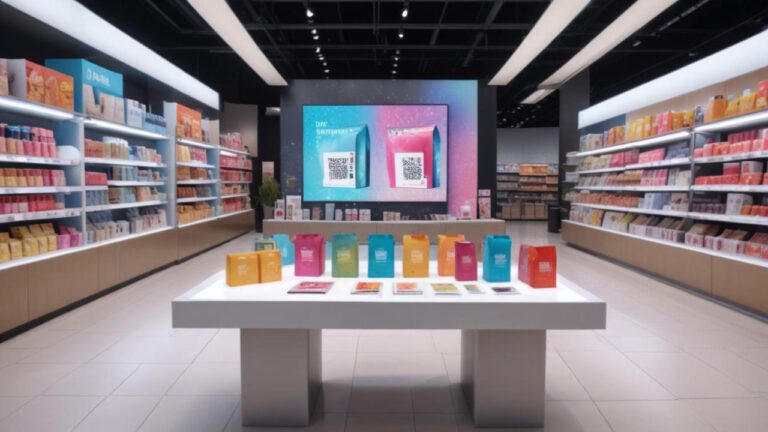
AR QR code packaging connects a physical product to a live digital experience through a single scan. When a user points their phone camera at the QR code on a label, the browser opens an augmented reality scene layered over the real world, with no app download required. For CPG brands, this turns every label into an interactive touchpoint.
The mechanics are straightforward. The QR code encodes a URL. That URL loads a WebAR experience built for that product. The phone camera renders the AR content in the browser, and the user interacts directly. No friction, no installs, no waiting.
This has changed what packaging can do commercially. Labels no longer end at the shelf. They extend into gamified promotions, ingredient storytelling, loyalty sign-ups, and conversion events, all trackable by the brand in real time.
What Is AR QR Code Packaging and How Does It Work
AR QR code packaging is a system that uses a printed QR code on product packaging to trigger a browser-based augmented reality experience on the user’s phone. The experience is hosted in the cloud and delivered instantly through the device’s native browser.
The technical chain works like this. The QR code is printed on the label during production. When scanned, it resolves to a WebAR URL. The browser loads the experience, accesses the device camera, and overlays the AR content in real time. The whole process takes under five seconds on a modern smartphone.
What separates AR QR code packaging from a standard QR code redirect is what happens after the scan. Instead of landing on a static product page, the user enters a spatial, interactive experience: a 3D product reveal, a spin-to-win game, a recipe guide with AR overlays, or a brand story told through animated characters on the label itself.
GS1, the global standards body behind barcode and QR code standards used in retail, recognises that 2D codes on packaging are now gateways to rich digital content: product information, traceability data, and live promotions can all be updated without reprinting the label (GS1, 2025). AR QR code packaging takes that principle further by making the post-scan experience fully immersive rather than just informational. Building these experiences used to require specialist WebAR developers. Platforms like HOVARLAY Creator have changed that. Brands now build AR QR code packaging campaigns through a drag-and-drop interface at hovarlay.com/webar-builder/, link the output to a generated QR code, and deploy per SKU without writing a single line of code.
Why CPG Brands Are Choosing AR QR Code Packaging Over Standard QR Codes
Standard QR codes are useful for redirects. AR QR code packaging is useful for conversion. The difference is measurable.
A plain QR code scan that lands on a product page gives a brand one data point: the scan happened. An AR QR code experience gives the brand the scan, the dwell time, the actions taken inside the experience, form submissions, and post-experience behaviour. The analytics layer is fundamentally different.
Engagement intent is also higher. Email marketing, one of the highest-intent digital channels, averages a 2.62% click-through rate across all industries (Mailchimp, 2025). AR QR code packaging campaigns on HOVARLAY average a 13.23% conversion rate from scan to action (HOVARLAY internal data, 2025). The gap reflects a structural difference: a user who chooses to scan a label is already holding the product and has self-selected for engagement. The AR experience capitalises on that intent.
HOVARLAY Insights, the platform’s analytics module, captures all campaign data at the SKU level. Brands can see which products are being scanned, which AR interactions users are completing, where users drop off, and which calls to action convert. For a brand manager trying to justify packaging investment, this data closes the attribution loop that traditional packaging never could. Explore how other brands have measured results at hovarlay.com/case-studies/.
How to Build an AR QR Code Packaging Campaign With HOVARLAY
Building an AR QR code packaging campaign on HOVARLAY follows a clear production path. The brand selects the SKU, designs the AR experience in Creator, generates the QR code, and deploys.
The experience design step is where most of the creative work lives. HOVARLAY Creator supports several experience types well-suited to packaging: 3D product reveals, where a product model appears floating above the label when scanned; gamified overlays, where the user spins a wheel or hunts for tokens; video embeds, where a brand film or ingredient story plays inside the AR frame; and lead capture forms, where the post-experience CTA collects the user’s contact details before they leave.
Each experience links to a unique QR code that routes to that SKU’s WebAR URL. If the brand runs a seasonal campaign, they can update the experience on the backend without reprinting the label. The QR code URL stays the same. Only the content behind it changes. This is one of the more practical advantages of WebAR over static packaging inserts: campaigns can iterate in real time without new print runs.
The lead capture capability is worth separating out. HOVARLAY Campaigns, the platform’s gamification module, is designed specifically to run promotions from packaging scans. The Happy Harvest 10.10 campaign is a real example: a gamified AR activation launched from product packaging that ran conversion events directly through the scan-to-experience journey. Once live, HOVARLAY Lens handles the rendering. The user scans, the experience loads in under five seconds, and the brand’s campaign starts working. No app install prompt. No redirect to an app store. No drop-off at the installation step.
Measuring AR QR Code Packaging Performance
AR QR code packaging performs across three measurable categories: reach, engagement, and conversion. Each one has specific metrics worth tracking.
Reach is the scan count. How many unique users scanned the QR code in a given period? This number tells the brand how effectively the packaging is driving scan behaviour. If scan rates are low, the issue is typically print placement, code size, or the absence of an activation prompt near the QR code. A short CTA phrase printed near the code, something like “Scan to unlock,” reliably increases first-scan rates without adding significant print cost.
Engagement is everything that happens inside the experience. Dwell time matters here. How long are users spending inside the AR scene? Which interactions are they completing? Where are they exiting? HOVARLAY Insights delivers this data at the campaign level. A high scan rate with low dwell time usually signals that the experience needs to be more compelling or faster to load. A high dwell time with low conversion usually means the CTA inside the experience is not visible enough or the offer is not compelling.
Conversion is the downstream action. Did the user submit their contact details? Did they tap through to the product page? Did they redeem the offer? This is where the 13.23% average matters as a benchmark (HOVARLAY internal data, 2025). Brands running below that figure have room to optimise. Brands running above it have something repeatable worth scaling. For brands starting out, the practical path is to pilot AR QR code packaging on one SKU before rolling it across a range. HOVARLAY’s per-SKU pricing model at hovarlay.com/pricing/ is structured exactly for this kind of test-and-learn deployment.
FAQ
Q: What is AR QR code packaging?
A: AR QR code packaging is a system where a QR code printed on product packaging links to a browser-based augmented reality experience. When a user scans the code with their phone camera, an AR scene loads in the browser without any app installation required. Brands use this to deliver interactive product stories, gamified promotions, and lead capture campaigns directly from the label.
Q: Do users need to download an app to access AR QR code packaging?
A: No. AR QR code packaging built on WebAR platforms like HOVARLAY uses the device’s native browser to render augmented reality. The user scans the code and the experience opens immediately in their browser. There is no app download, no app store redirect, and no installation step that could cause drop-off.
Q: How do you measure the performance of an AR QR code packaging campaign?
A: Performance is tracked across three levels: reach (scan count), engagement (dwell time and in-experience actions), and conversion (form submissions, CTA clicks, or redemptions). Platforms like HOVARLAY Insights capture all three in a single dashboard, so brands can see exactly which SKUs are driving activity and where campaigns are converting.
Q: How long does it take to build an AR QR code packaging campaign?
A: Using a no-code platform like HOVARLAY Creator, a basic AR QR code packaging experience can be built and deployed in a single working day. More complex gamified campaigns with lead capture forms typically take two to four days, depending on the creative assets required. The QR code is generated automatically by the platform once the experience is published.
Q: Can brands update their AR QR code experience without reprinting packaging?
A: Yes. Because the QR code points to a WebAR URL hosted in the cloud, brands can update the experience behind the code at any time. The printed label stays the same. This means seasonal promotions, new product messaging, and campaign refreshes can all be deployed without a packaging reprint, which is one of the key commercial advantages of AR QR code packaging over static label inserts.
Start free at https://dashboard.hovarlay.com/signup
Related reading: AR Packaging Examples: 10 Brands Getting It Right in 2026 | How AR Packaging Works: From QR Code to Immersive Experience