On this page
AR Packaging Examples: 10 Brands Getting It Right in 2026
- What AR Packaging Examples Actually Teach You
- F&B Brands Leading with Gamified AR Packaging Examples
- Beauty and Personal Care: AR Packaging Examples with Try-On and Education
- FMCG: AR Packaging Examples at Scale
- What Makes an AR Packaging Example Worth Copying
- AR Packaging Examples by Campaign Type
- Different campaign goals call for different AR mechanics. Here is how the main types map to outcomes:
- FAQ
- Start Your AR Packaging Pilot


TL;DR
- AR packaging turns physical packaging into interactive digital experiences using a phone camera, no app required.
- Brands across F&B, beauty, and FMCG are using AR to run gamified campaigns, tell product stories, and capture first-party data.
- The best AR packaging examples share one trait: a clear measurable outcome tied to each scan (leads, conversions, or engagement time).
- WebAR platforms like HOVARLAY make it possible to pilot AR on one SKU without a developer or an app download.
- Average campaign conversion rates for AR packaging campaigns reach 13.23%, far above typical email or social benchmarks.
What AR Packaging Examples Actually Teach You
The best AR packaging examples are not just creative showcases. They are commercial case studies. Each one reveals a specific decision: what trigger was used, what experience ran, and what the brand measured at the end.
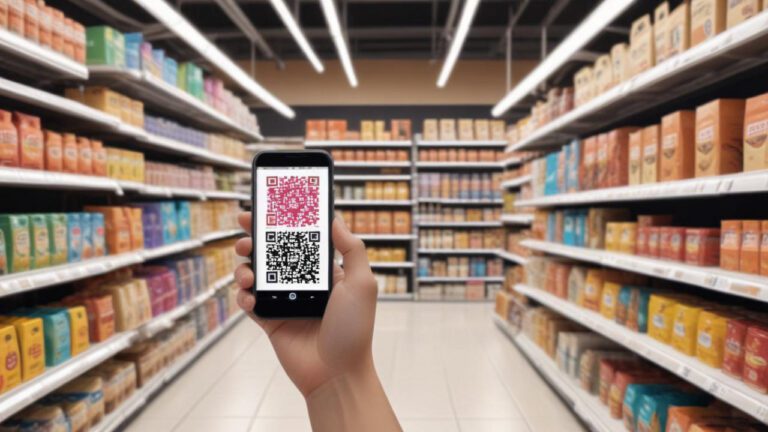
Scanning a QR code on packaging and landing in a gamified loyalty experience is not magic. It is a deliberate content and conversion strategy. The brands doing this well have moved from treating packaging as a static surface to treating it as a media channel with a measurable return.
This article covers 10 real AR packaging examples across categories, with a focus on what worked and why. These are the patterns worth copying, not the aesthetics.
F&B Brands Leading with Gamified AR Packaging Examples
F&B brands have moved fastest into AR packaging because their purchase cycles are short and repeat frequency is high. When a user scans a bottle or a box and gets a chance to spin a wheel or unlock a recipe, the brand captures an email, extends the shelf moment, and creates a reason to return.
The Happy Harvest 10.10 campaign is one of the clearest AR packaging examples in Southeast Asia. A QR code printed on promotional packaging triggered a WebAR spin wheel experience. No app required. Users entered the experience directly in their mobile browser, played, and submitted their details to claim rewards. The campaign ran across a single product line and captured measurable lead data from physical packaging, a channel that previously produced zero first-party data.
A similar pattern appeared in the HERA Bathroom CNY red packet campaign, where AR was triggered from a limited-edition red packet. The experience layered digital animation over the printed design, extended the ritual of giving with interactive content, and tracked engagement per scan. This is exactly what AR packaging examples should demonstrate: that the package itself becomes the entry point to a brand relationship, not just a container.
F&B brands should note that this approach works on any printed surface. A QR code on a sleeve, a label, or a gift wrapper can all trigger the same type of experience. The investment is in the digital layer, not the packaging reprint.
Beauty and Personal Care: AR Packaging Examples with Try-On and Education
Beauty brands face a specific problem: users want to know how a product looks or works before they commit. AR packaging solves this by attaching a try-on or ingredient explainer directly to the product label. The scan replaces the in-store beauty advisor.
Global beauty brands have piloted AR packaging that activates a virtual try-on when the product is held up to the front camera. The user sees the lip colour or foundation overlaid in real time, makes a choice, and can share the result. This format reduces returns and builds purchase confidence at the moment of consideration (Forbes, 2024).
A second format growing in beauty is the ingredient story. Scanning the label activates a short animated sequence that explains the hero ingredient, its origin, and its effect. This works particularly well for wellness and skincare brands where the ingredient list is a selling point but the label space is limited. The AR layer expands what the label can say without changing the physical design.
For CPG brands in beauty, the key is to connect the AR experience to the primary purchase driver. If trial is the barrier, run a try-on. If trust is the barrier, run an education sequence. If loyalty is the goal, run a reward mechanic. Each requires a different experience but the same trigger: one QR code on the pack.
FMCG: AR Packaging Examples at Scale
FMCG is where AR packaging examples get interesting at volume. When a brand runs across hundreds of SKUs in multiple markets, the question is not whether AR works. It is how to deploy it consistently without a large development team behind every SKU.
The Summarecon Golden Expo campaign used WebAR to run a property-sector interactive experience triggered from printed collateral. While not a grocery SKU, the model transfers directly to FMCG: a single QR code, a browser-based AR experience, and a lead capture form at the end. No app install step. The conversion rate from scan to form completion tracked above the campaign’s digital channel average.
In FMCG specifically, the no-code deployment model matters. Brands running seasonal promotions cannot wait 12 weeks for a developer build. WebAR platforms like HOVARLAY’s [no-code AR builder](/webar-builder/) allow a marketing team to configure, brand, and launch an AR experience on a new SKU in days. That speed changes how brands think about AR from a premium one-off to a repeatable promotional layer.
Research from Deloitte (2024) found that 64% of CPG executives expect packaging to carry digital engagement functionality by 2027. The brands building that capability now, even at small scale on one SKU, are developing the workflow and the data baseline that will matter when the category expectation shifts.
What Makes an AR Packaging Example Worth Copying
Strong AR packaging examples share a structure that goes beyond the creative. The experience is brief (under 90 seconds), the trigger is obvious on the pack, there is one clear action for the user to take, and the brand captures something measurable at the end.
Weak AR packaging examples do the opposite: a long experience with no clear CTA, a QR code buried in the legal copy, and no data capture. The brand can say they “did AR” but cannot measure what happened or repeat what worked.
The pattern to replicate is: clear trigger, short experience, one conversion moment. If the experience is gamified, the reward claim is the conversion. If it is educational, the email signup or product page visit is the conversion. If it is try-on, the share action is the conversion. Every AR packaging example worth copying has this structure.
Brands that want to pilot this without committing to a full SKU redesign can test AR on one product using a label sticker or an insert card. The physical packaging does not need to change. The QR code is the only required element. See [HOVARLAY pricing](/pricing/) to understand what a single-SKU pilot costs before scaling.
AR Packaging Examples by Campaign Type
Different campaign goals call for different AR mechanics. Here is how the main types map to outcomes:
Gamified spin wheel or scratch card: Best for promotions, CNY, Eid, or seasonal campaigns. Captures leads. Works on gift packs, bottles, and boxes. HOVARLAY Campaigns averages 13.23% conversion per scan session.
Product story or heritage film: Best for premium and heritage brands. The scan triggers a short overlay that plays through the product’s origin story. Engages users longer but captures less data unless paired with a CTA.
Ingredient or nutritional explainer: Best for health, wellness, and functional food brands. Converts on trust. Works where the label is dense and the ingredient story is a differentiator.
Virtual try-on: Best for beauty and fashion accessories. Drives trial without the in-store requirement. Requires front-camera access but no app.
Loyalty reward unlock: Best for FMCG brands running repeat-purchase programs. The scan becomes the loyalty mechanic, driving both repeat purchase and data collection.
Review [HOVARLAY case studies](/case-studies/) to see how these campaign types have performed across actual brand deployments.
FAQ
What is an AR packaging example?
An AR packaging example is a real-world use case where a brand has added augmented reality to their physical packaging, typically triggered by a QR code. When scanned, the packaging activates a digital experience in the user’s mobile browser without requiring an app download.
Which industries use AR packaging most?
F&B, beauty, FMCG, and retail are the leading categories. These industries have high purchase frequency, strong promotional cycles, and clear reasons to engage users directly from the pack. Brands in Southeast Asia, particularly Singapore and Indonesia, are seeing the fastest adoption in the region.
How do I measure the success of an AR packaging campaign?
The main metrics are scan rate (QR scans per unit sold), engagement rate (percentage who interact with the experience), and conversion rate (percentage who complete the CTA, such as a form fill or loyalty registration). HOVARLAY Insights tracks all three with per-scan granularity.
Do AR packaging examples require app downloads?
No. All the AR packaging examples in this article use WebAR, which runs in the mobile browser. Users scan the QR code and the experience launches immediately. No app store visit, no download, no friction. This is why WebAR outperforms app-based AR for packaging use cases (Statista, 2025).
How much does it cost to pilot AR on one SKU?
HOVARLAY’s Starter plan runs from $6 to $9 per SKU per month. That covers a single product with a live AR experience, analytics, and campaign management. A single-SKU pilot is the recommended first step for any brand evaluating AR packaging for the first time. Start free at https://dashboard.hovarlay.com/signup
Start Your AR Packaging Pilot
Every AR packaging example in this article started with one SKU, one QR code, and one measurable goal. The brands that are now running AR across their full range built that capability by starting small, validating the return, and expanding.
HOVARLAY is built for exactly that progression. Free to start, per-SKU pricing at [HOVARLAY pricing](/pricing/), and a [no-code builder](/webar-builder/) that a marketing team can operate without developer support.
Start free at https://dashboard.hovarlay.com/signup
Related reading: Augmented Reality Packaging: A Guide for CPG Brands in 2026 | AR for Retail: How CPG Brands Drive Sales from Packaging